Autopsy Nº 05·Global
Uber - The owner of the door
Uber stands at the door of almost every night out in the city and only charges the toll. Desire is on the other side of that door, and Uber already holds the keys without using them.
- BRAND ANALYZED:
- Uber
- Industry
- Mobility
- Country
- Global
- Published
- November 3, 2026
In five lines
Uber does not have a usage problem: 3.867 billion trips in a quarter and 208 million users a month. It has a desire problem: in New York only 16.1% compare prices with Lyft, even though they differ by 14%. That is habit, not love. The mistake is not what it does, it is the question that organises it: what else to sell to whoever is already in the app. That produces a menu, and a menu does not produce desire. The question that changes the decision is a different one: how do we get people to go out more. The enemy is not Lyft or DiDi, it is the sofa. People do not desire to travel: they desire to go out. Uber already has the pieces —bookings, hotels, advertising, 50 million members— and lacks the promise that puts them in order.
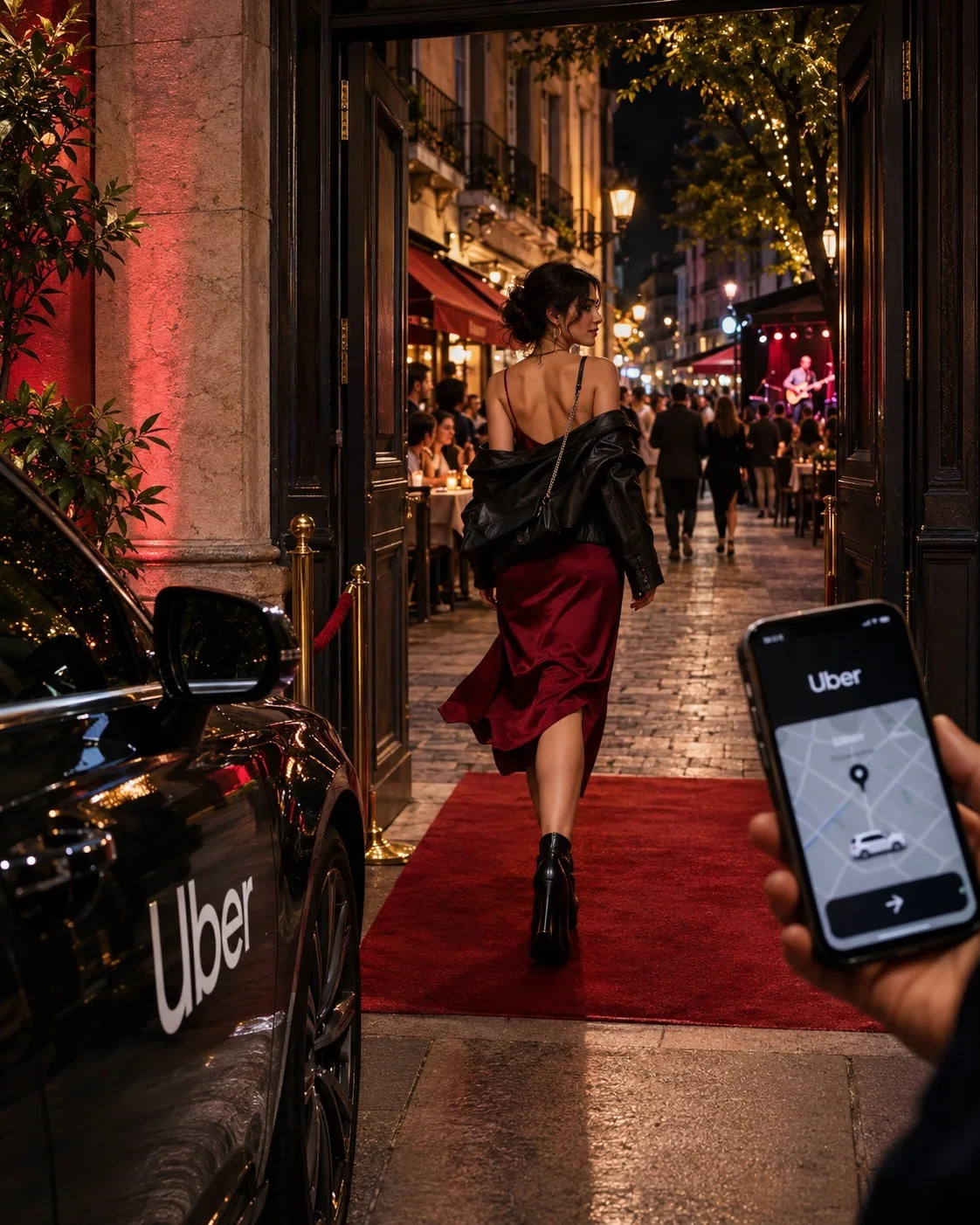
Conceptual cover: Uber at the door of urban life.
Scope and method
An independent reading from the outside, with public sources consulted up to 3 November 2026. No access to internal data, no commission and no validation from Uber. At the time of writing, the third-quarter 2026 results had not been published.
I separate four kinds of statement: fact (with its source alongside), inference (my reading, marked as such), design hypothesis (an untested proposal, including prices, allocations and targets) and data not available. This version combines several levers into a single system, by the author's explicit decision: an isolated improvement is not enough to move demand at a company this size. Robotaxis are left out: today they are a phenomenon of a handful of United States cities.
01 The uncomfortable truth
Uber does not have a usage problem. In the second quarter of 2026 it completed 3.867 billion trips with 208 million monthly active users (Uber, second-quarter 2026 results). Uber One passed 50 million members, who already generate half of everything booked on the platform (Uber, first-quarter 2026 results).
It has a desire problem, and it shows in a small figure. In New York, the same trip costs on average 14% more or less between Uber and Lyft, and even so only 16.1% of those who open one of the two apps open the other (Luca, Fossett and Xu, NBER, via Johns Hopkins Hub, January 2026). People do not compare because it is a bother. That is habit, not love. And where somebody offered another logic, the habit broke: in Latin America, Uber's share of active users fell to 49% in 2024, 32 points below 2019 (Sensor Tower, November 2024).
The most uncomfortable part is that it was not always like this. Between 2013 and 2014, Uber was the app where things happened: an ice-cream truck on demand, fifteen minutes with kittens in the office for Cat Day, a Christmas tree, a private jet to Cannes, a hidden button that gave away access to a festival (YPulse, June 2014). Nobody opened Uber just to go from point A to point B. They opened it to see what was there.
Uber did not lose desire by growing. It lost desire when it stopped promising nights out and started selling rides.
02 The invisible mistake
Uber operates very well. It arrives, it charges, it protects, and in 2026 it keeps adding features: coffee waiting in the car, shopping from any store, hotels via Expedia, a voice assistant (The Rideshare Guy, May 2026). The problem is not what it does. It is the question that organises everything it does: what else can we sell to the person who is already in the app?
That question produces a menu. A menu does not produce desire. Inference: every new feature is one more reason not to delete the app, but none of them is a reason to open it with any eagerness. That is why Uber retains by habit: always within reach and almost never in mind.
There is a second, finer mistake. Uber thinks of itself as the means and leaves the end to others. The restaurant keeps the night, the stadium keeps the emotion, the hotel keeps the trip. Uber keeps twenty minutes of travel and the fare. And yet it is almost the only company that is there before and after that night, every night, in hundreds of cities.
Is emotional demand committed? Against the three behaviours of the method: it is repeated, strongly; it is sought out, by habit, because it is the verb of the category; it is recommended, data not available. This is a brand with extremely high frequency and low affection. What is necessary is tolerated.
03 The change of question
The question that limits Uber is how to carry you better. The one that changes the decision is this:
How do we get people to go out more?
Not travel more. Go out more. To dinner, to the gig, to the match, to see the friend on the other side of the city. Every night out that does not happen is an outbound trip and a return trip that do not exist. And most of the nights out that do not happen are not cancelled for lack of desire: they are cancelled by friction. There is no table, the ticket sold out, it is a hassle to organise, I do not know how I get home, the ride back will cost triple.
The enemy, then, is not DiDi or Lyft. It is the sofa. The night that never happened. Uber is the only company in the world that makes money every time somebody beats the sofa, and it never turned that into its cause.
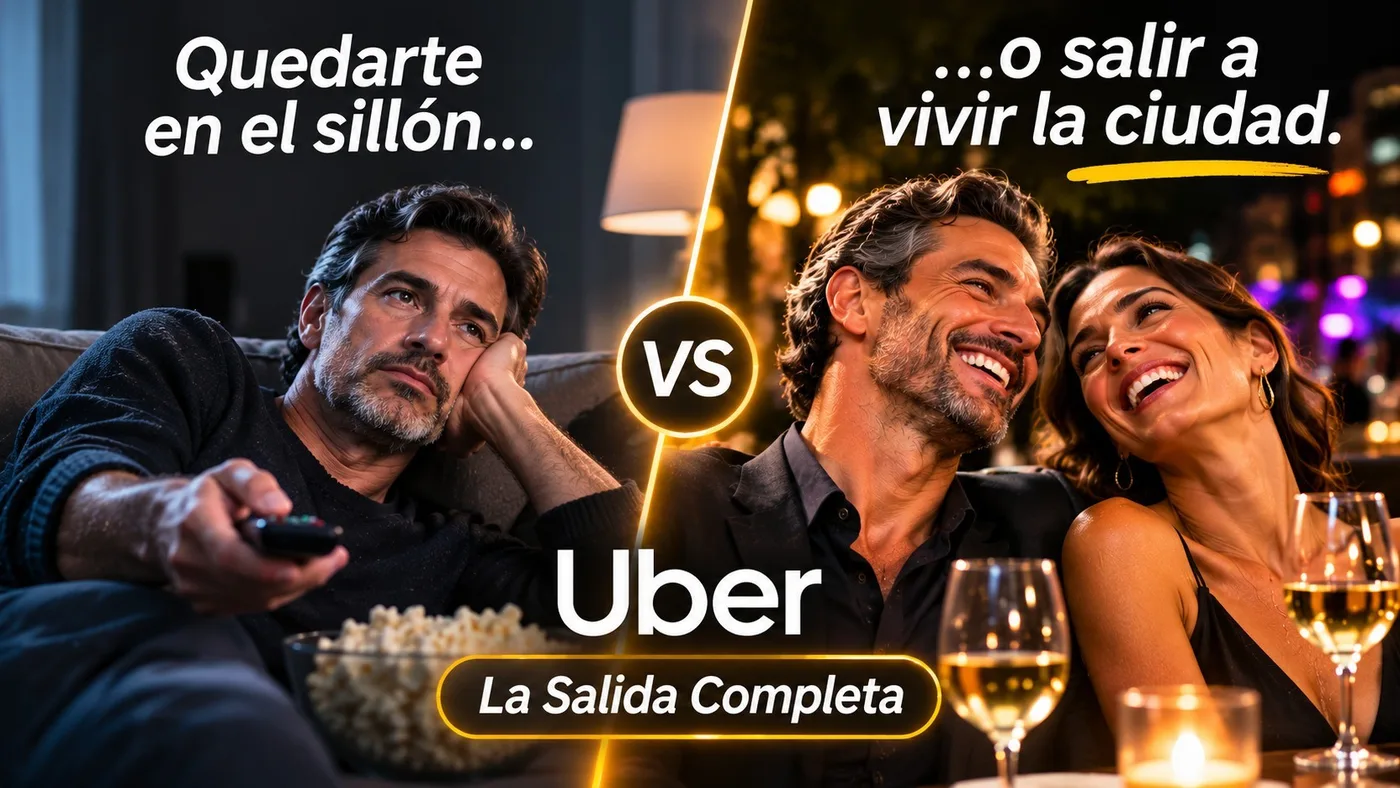
The enemy is not another app: it is the night that never happened. Conceptual visualisation created with AI.
04 The founding insight
People do not desire to travel. They desire to go out. Uber stands at the door of almost every night out in the city and only charges the toll.
Against the four tests. Recognition: anyone who has called off a night out because they did not know how they would get home understands it. Simplicity: one sentence. Consequence: it changes the unit of the product, from "trip" to "night out" (there, the place, back), and it changes the metric that rules, from trips to nights out per member. Non-obviousness: the entire category competes on the journey; the emotional value is at the destination.
Status: provisional insight. It would be confirmed if members who use the complete night out go out more times per month than a control group. It would be refuted if they use the bookings but their frequency of going out does not change.
What Uber already has and has not connected. Restaurant bookings integrated with OpenTable in the app, launched in the United States, Canada, Germany, Mexico, Ireland, Australia and the United Kingdom (Restaurant Online, December 2025). Hotels with Expedia (The Rideshare Guy, May 2026). An advertising business of more than 2 billion dollars a year, growing more than 50% year on year (Techleap via Yahoo Finance, April 2026). Favourite Driver since 2020 (iPhone in Canada, October 2020). Women Preferences across the United States (NBC Palm Springs, March 2026). And 50 million members. The pieces are there. What is missing is the promise that puts them in order.
The word the brand could stand for: going out. It is a verb people desire, that no transport app owns, and that Uber can deliver better than anyone because it is the only one that solves both ends.
05 The vision: from carrier to host of the city
The new role: Uber stops being the car that takes you and becomes the reason you actually go out tonight. There is no need to invent a category: there is a need to occupy an empty place between the restaurant, the event and the transport, which today nobody coordinates for the customer. The proposal combines five levers into a single system. Each one attacks a different behaviour of desire.
Lever 1. The Complete Night Out: go out without worrying how you get back
This is the base product and the category practice being challenged: that the ride home is bought blind, at whatever price applies at whatever hour. In four steps:
- You choose the plan. You book a table or a ticket from Uber, with the partners that already exist.
- The ride there arranges itself. The trip is scheduled to arrive on time.
- The ride back is secured when you book. The return price is fixed and visible at that moment, for a time window. If there is surge pricing when you leave, it does not reach you.
- You come back with someone you know, if you want. For the return you can request one of your saved drivers or, where it exists, a woman driver.
Why it generates real demand: it removes the two frictions that kill the most nights out, getting a place and the fear of the ride home, and it turns a loose trip into two trips tied to a decision the person already made gladly.
Price hypothesis: a fixed charge for the secured ride home, in local currency, or included for members; both are tested. The surge-pricing risk Uber absorbs is offset by the secured outbound trip and by what the venue pays.
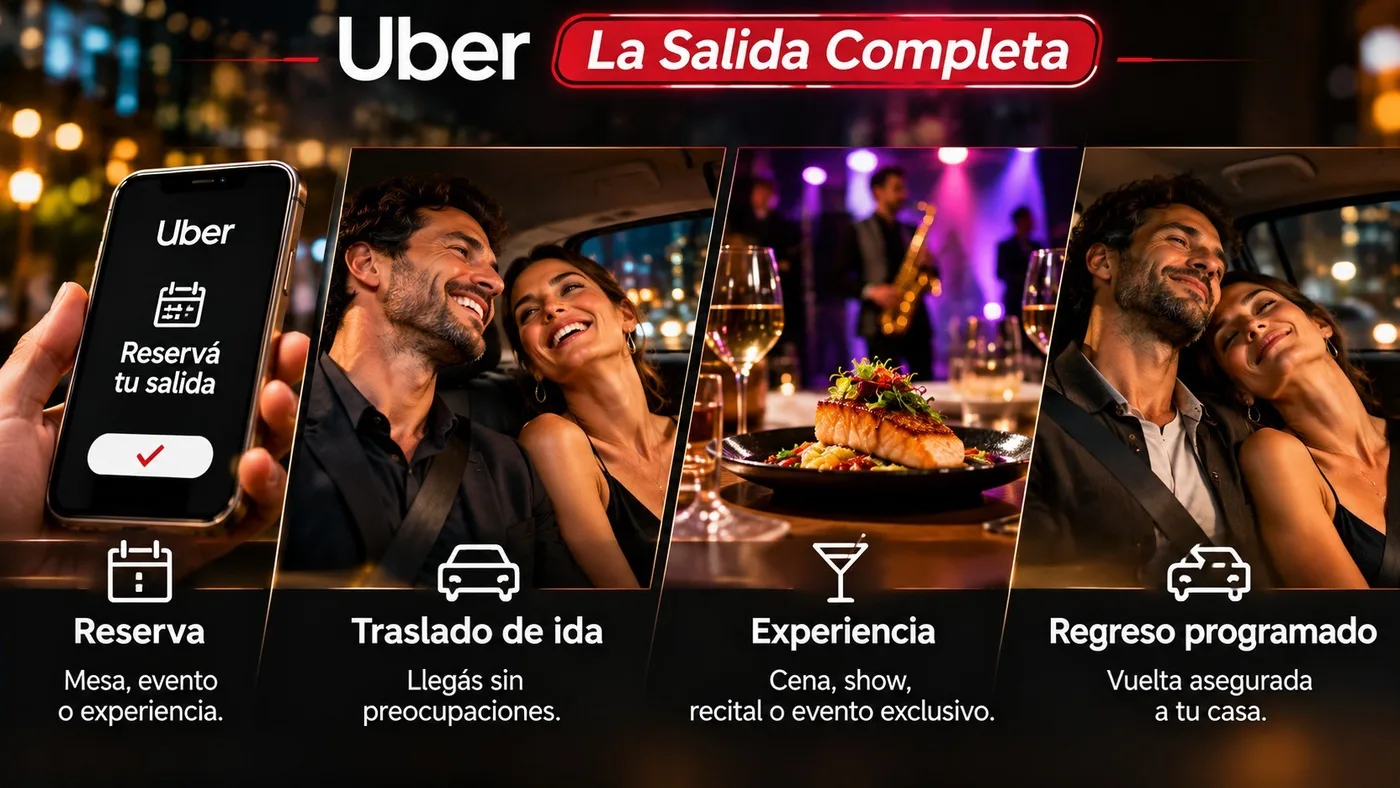
The Complete Night Out: booking, ride there, experience and return. Proposed service; hypothetical interface.
Lever 2. The Key: Uber One as the pass to the city
Uber One stops being a free-delivery programme and starts opening doors. Partner venues reserve for members a share of their capacity in sought-after slots: the nine o'clock table on Friday, the ticket to a sold-out gig that is released, the fast queue at a club. The scarcity is real, not manufactured: a good restaurant has few tables on a Friday. What changes is who gets to them first, with clear and public rules: active members, in booking order or by draw when demand exceeds supply.
Why the venue accepts it: design hypothesis. Uber guarantees it diners who arrive on time and charges it per person seated, as it charges for advertising today. The ads business already proves that businesses pay to be in front of Uber's users; this is the physical version: paying for customers at the table, not for clicks. Why the member desires it: access. Getting in where others cannot find a place is one of the few things that are genuinely desired and genuinely talked about.
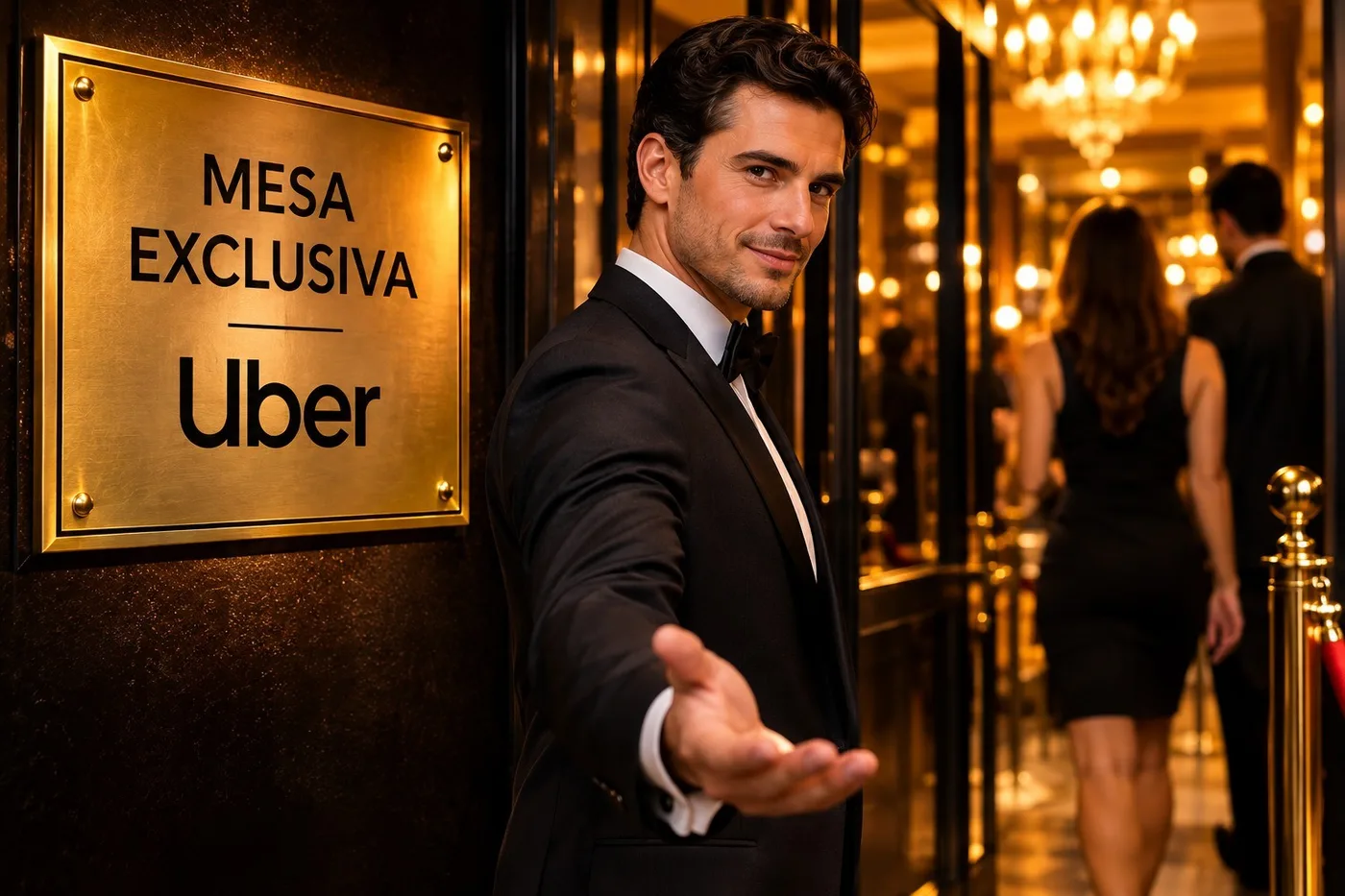
The Key: access to real capacity at partner venues. Hypothetical scene generated with AI.
Lever 3. The Drops: wonder returns to the app
This recovers what made Uber desired at the beginning, with a new rule: no once-a-year stunt. Every month, in every city in the programme, the app releases genuinely limited experiences: a chef's dinner at a place with no address that you can only reach with Uber, the helicopter or boat transfer to the match, the intimate gig for a hundred people. They are announced one day in advance. They are assigned by draw among members who sign up; they cannot be bought with more money. They are funded by partner brands, which already invest in Uber's advertising.
Why it generates real demand: it changes the reason to open the app. It is no longer only "I need a car", it is "let's see what there is this week". It is the "sought out" behaviour of the method, measurable in app opens without a notification. And every drop produces something the journey never produced: a story people tell.
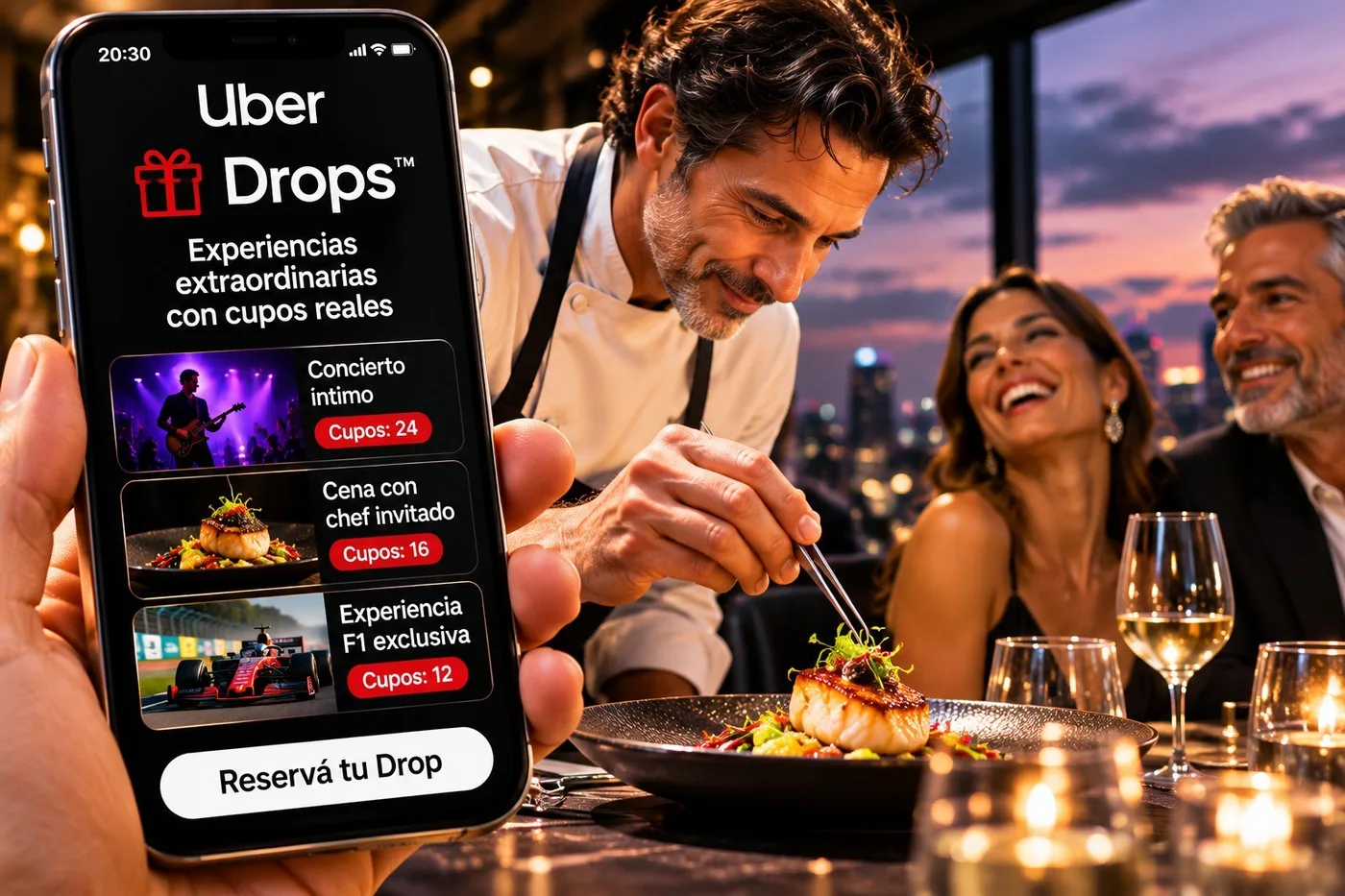
The Drops: extraordinary experiences with real allocations. Hypothetical concept, not a current offer.
Lever 4. Status you can see
Tiers within Uber One earned through nights out, not through spending, and not lost because of one quiet month. Each tier gives benefits that are noticed: an automatic upgrade to a better car when one is available, priority in the drops draw, a Black ride on your birthday, more allocations in the Key. Airlines proved decades ago that people work for visible status. Uber has more frequency than any airline and has never given its frequent customer a name.
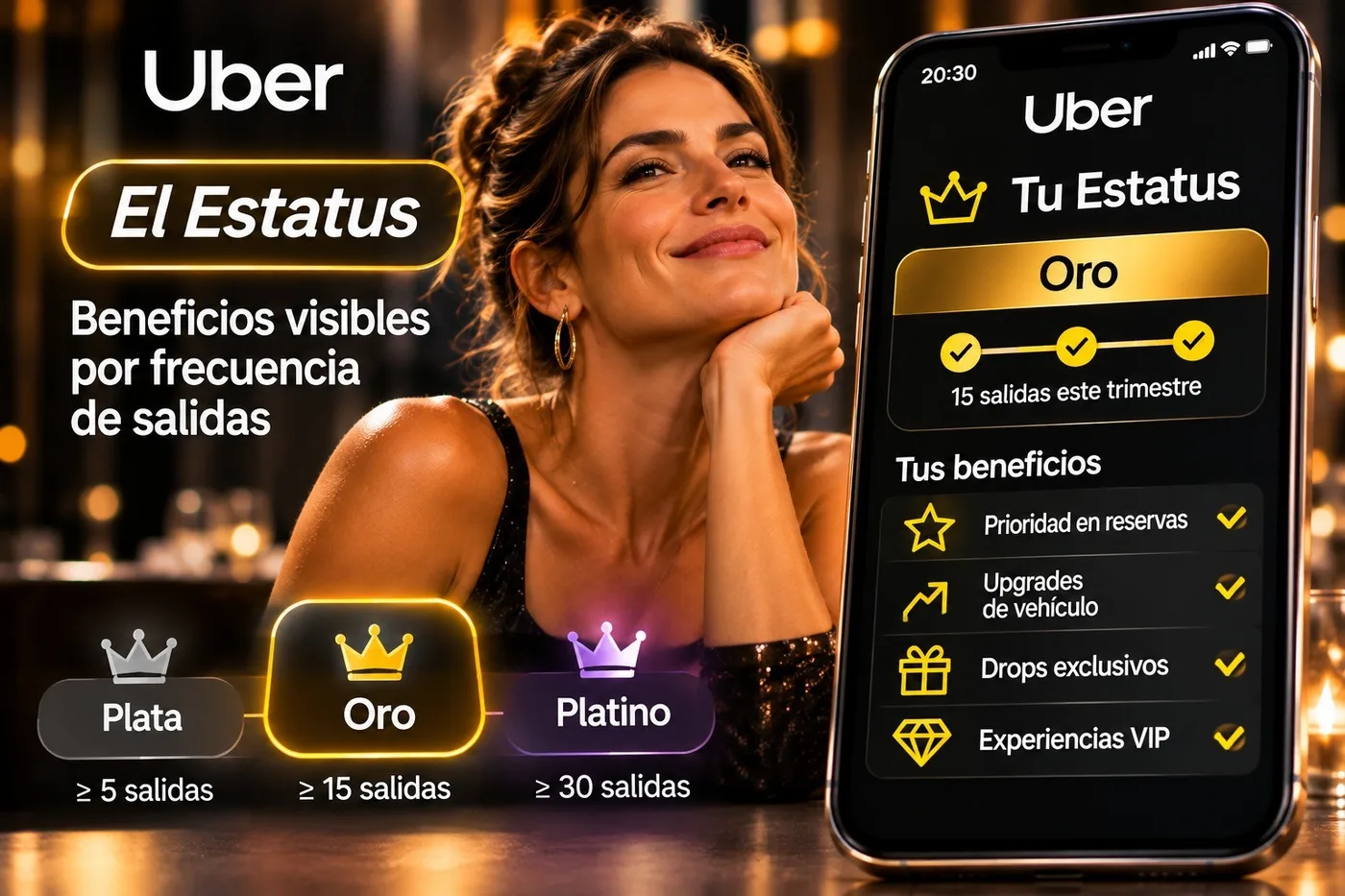
Status by nights out: tiers and advantages to be tested in a pilot; conceptual screens.
Lever 5. Your city, the year you went out
Once a year, every member receives their count of nights out: the new places they discovered, the night they got home latest, the neighbourhood they visited most, the driver who took them most often. Optional, private by default and made to be shared. Uber holds the most intimate memory of the urban life of 200 million people and has never given it back to them. This is the "recommended" behaviour: people show what makes them look good, and going out a lot makes you look good.
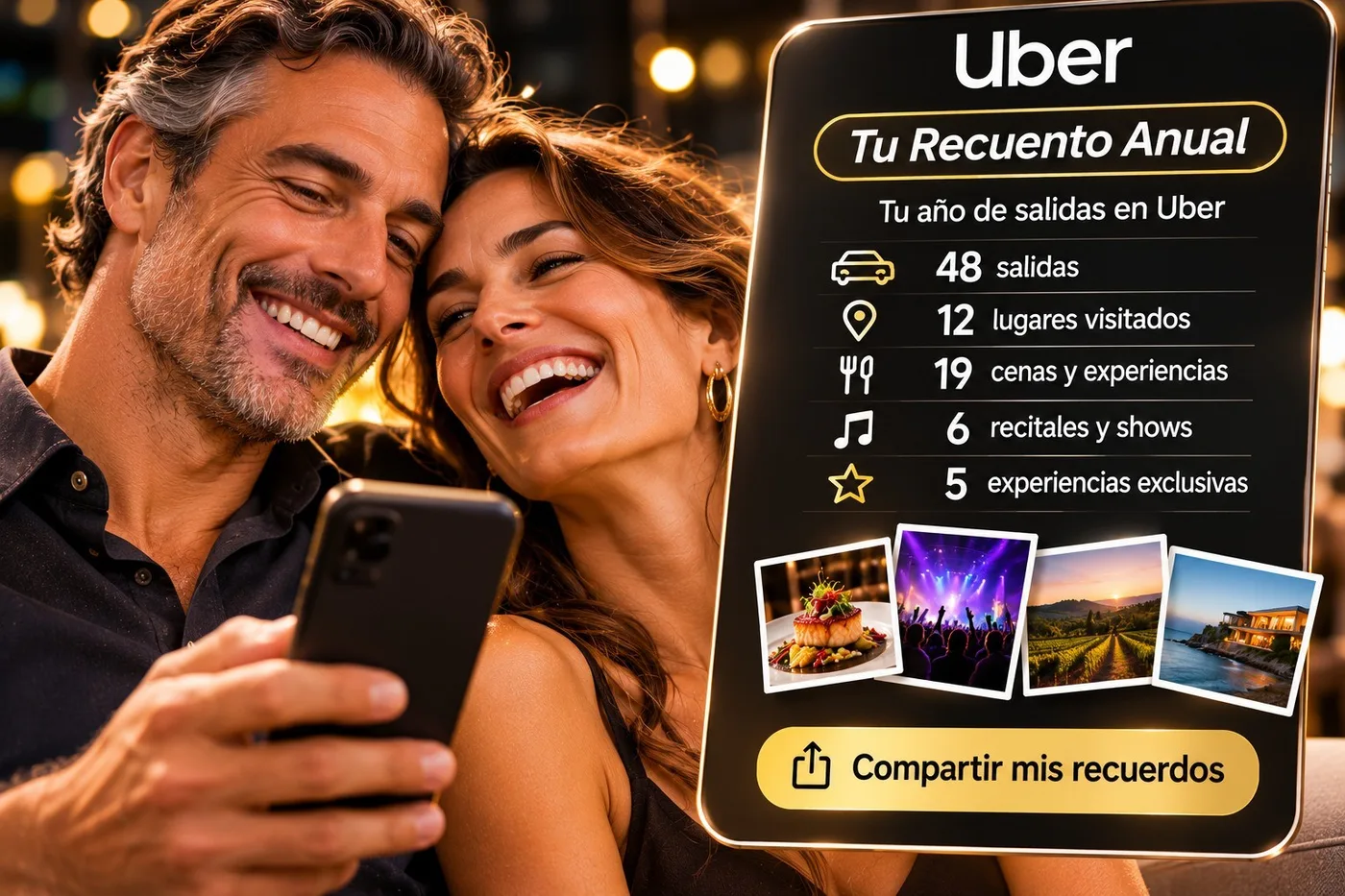
A private, shareable annual recap: places and memories. Illustrative data and interface.
How it links together
The drops bring the seeking. The Complete Night Out and the Key turn that seeking into real nights out. Status rewards the repetition. The annual recap turns it into recommendation. And underneath, the familiar driver sustains the trust of the ride home. If only one lever were applied, one behaviour would move. The three together are what the method calls a convergent signal of desire.
07 Hypothetical pilot scenarios
Let us imagine the programme working. Fictional names. None of this is a service Uber offers today in this form.
Valeria, the night that almost did not happen
Valeria wants to celebrate a friend's promotion on a Friday. Her first reaction is "it is a hassle, let us leave it for another day": the place they want has no table and the ride home on a Friday at one in the morning usually costs double. She opens Uber, sees that the place has tables for members at nine, books, and the app shows her the secured ride home at a fixed price. They go out.
What makes it possible: the Key and the ride home secured at booking.

Valeria: the dinner that almost got cancelled; the booking and the secured ride home change her decision. Hypothetical scenario.
Tomás, the first drop
Tomás never opened Uber without needing a car. On a Tuesday he sees that there is a dinner for forty people that week at a place with no address. He signs up, without much faith. He wins the draw. On Thursday the car drops him at a door with no sign. The next day he tells the whole office.
What makes it possible: drops by draw, funded by a partner brand.

Tomás: he arrives at a discreet door for a surprise dinner won in a draw. Hypothetical scenario.
Inés, the one who did not win
Inés signed up for three drops and did not come out in any of them. She is about to turn off the alerts. Instead, the app offers her a table at one of the drop venues for the following week. She takes it. It is not the same, but she does not feel cheated: the rules of the draw were in plain sight from the start.
What makes it possible: public rules and a real alternative for whoever does not win.
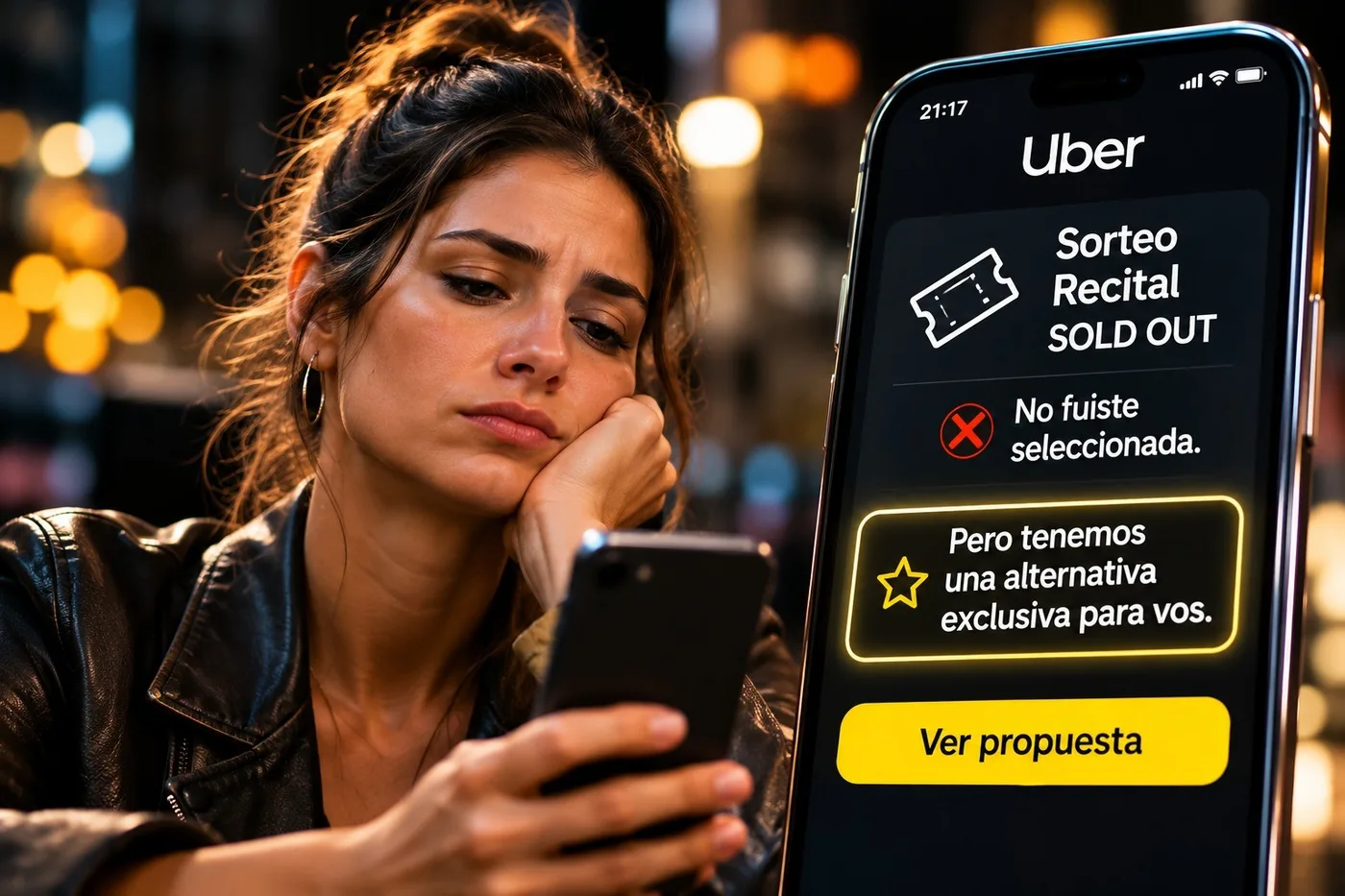
Inés: she does not win the draw and receives an alternative. Proposed interface; hypothetical scene.
Raúl, the driver
Raúl drives on Friday nights. Since the secured ride home exists he knows at what time and in what area there will be nights out, and eleven passengers have him saved for the way back. His night stopped being a lottery.
What makes it possible: scheduled returns and the familiar driver.
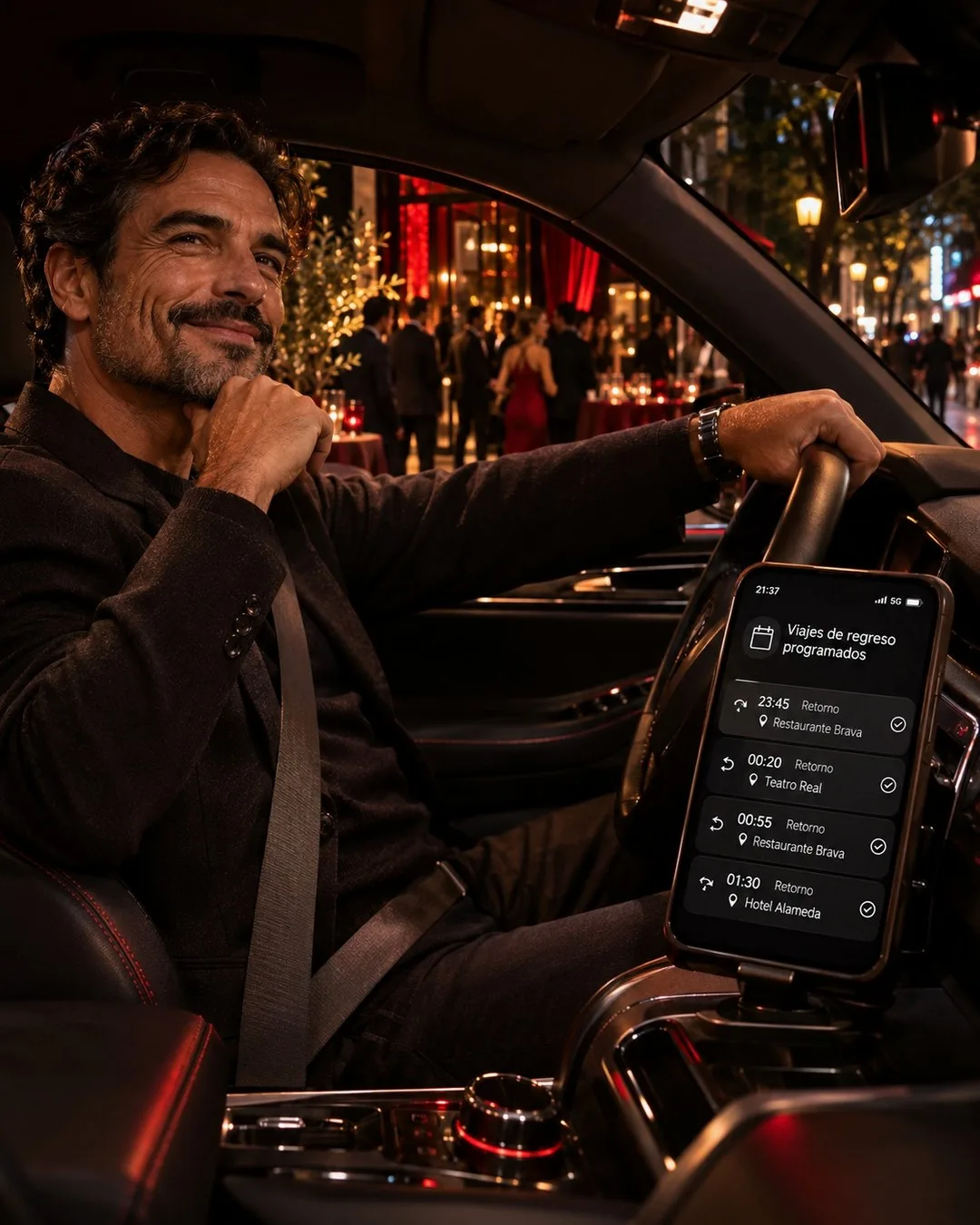
Raúl: he knows in advance the times and areas of scheduled returns. Hypothetical scenario.
Marta and Jorge, status
Marta and Jorge have gone out to dinner almost every week since they retired. One day the car that arrives is a Black, at no extra cost: they reached the tier with the automatic upgrade. Jorge mentions it in the group of friends. Two of them become members that month.
What makes it possible: tiers earned through nights out, with visible benefits.

Marta and Jorge: surprised to receive a category upgrade for how often they go out. Hypothetical scenario.
Lucía, in December
Lucía receives her year: 41 nights out, 23 new places, the night she got home at six. She shares it. A friend replies "who were you going out with so much?". Lucía sends her the invitation.
What makes it possible: the annual recap, optional and made to be shared.
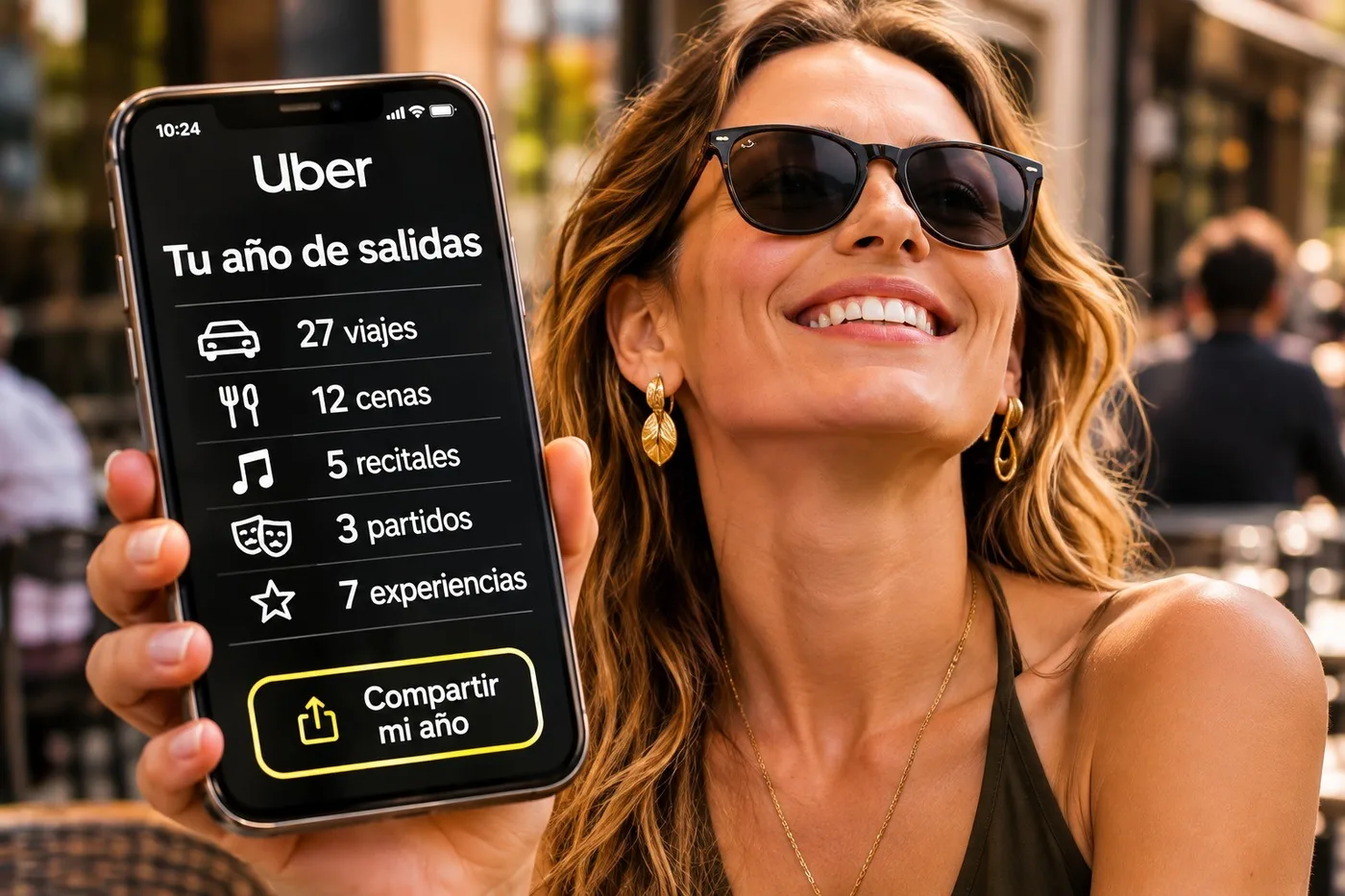
Lucía: she decides to share her year's recap; the data in the image is illustrative, not real.
How it pays, risks and boundaries
Who pays and why
Design hypothesis, with four possible sources of revenue: more trips, because every night out is there and back; the charge for the secured ride home; what venues pay per person seated; and what brands invest in the drops, within the advertising business that already exists. On the cost side: the surge-pricing risk absorbed on the ride home, the production of the drops and the status benefits.
The illustrative sum is simple: incremental contribution equals additional nights out per member times two trips times their margin, plus what is charged to venues and brands, minus the cost of the secured rides home and of the benefits. None of those terms has a reliable public figure today. That is why this is tested before it is promised.
Risks that can invalidate the system
- Venues do not give up capacity. Mitigation: start with the OpenTable partners already in the app and charge only per person seated, with no fixed fee.
- The secured ride home turns out expensive. Mitigation: a narrow time window, a loss cap per night and testing first on days of known demand.
- The drops become advertising in disguise. Mitigation: the experience has to be worth it on its own; the brand funds, it does not star. If people stop signing up, the format is cut.
- Frustration of those who never win. Mitigation: public rules, more chances by tier and always a real alternative.
- Cannibalisation with Uber Eats. A night out is one food order less. It has to be measured, not assumed; the hypothesis is that the night out is worth more to Uber than the order, because it adds two trips and the charge to the venue.
- Privacy of the recap. Mitigation: optional, private by default and never used to set prices, all the more so with the FTC investigating personalised pricing in the United States (AP via FOX 26, October 2026).
Boundaries
There is no invented scarcity: the allocations are the ones that exist. Nobody is charged differently according to who they are. Nobody is punished for using it little. The ordinary trip stays the same for everyone. What changes is that, for whoever wants to go out, Uber takes care of the whole night and not just the journey.
Why now
Because for the first time all the pieces are there: bookings integrated in seven countries, hotels, an advertising business that already charges businesses and brands, 50 million members and driver-preference features already built. Why not earlier is data not available. My inference: a company that measures itself in trips and waiting time has no indicator that rewards people going out more.
The pilot: ninety days
Everything that follows is a proposal. No unit is committed and no result exists.
| Field | Proposal |
|---|---|
| 1. Units | Two cities where OpenTable bookings are already in the Uber app, for example Mexico City and London. In each one, between 40 and 60 voluntary partner venues, two drops a month and a group of Uber One members who join voluntarily, with an equivalent control group. |
| 2. Timeframe | Weeks 1 and 2: baseline and instrumentation. Up to day 30: first adoption. Days 31 to 60: repetition and adjustments. Days 61 to 90: persistence and decision. An additional review on day 120. |
| 3. Baseline | Nights out per member per month (evening trips with a dining or events destination), trips per member, app opens without a notification, Uber One cancellations and OpenTable bookings. Without this prior measurement, the pilot is not entitled to compare. |
| 4. Metrics with targets | Provisional targets, to be set with the baseline: nights out per member against the control; trips per member against the control; occupancy of the Key allocations; net cost per secured ride home; revenue per person seated against the cost of the programme. |
| 5. Desire metrics | Sought out: app opens without a notification and sign-ups to drops. Repeated: second and third Complete Night Out within 60 days, by month of entry. Recommended: invitations accepted from shared recaps or drops, separated from incentivised ones. |
| 6. Condition to scale | Decided before the start: the three behaviours improve against the control, nights out per member rise and the contribution of the programme is positive or has a clear path to being so. |
| 7. Condition to stop | Loss on the secured ride home above the set cap; fewer than half the allocations taken by day 45; or sign-ups to drops falling two months in a row. The rule is not changed afterwards to declare success. |
| 8. Agreed exit | If it is stopped, bookings already made are honoured, secured rides home already sold are fulfilled, venues are paid what was agreed and tiers earned are kept until the end of the membership period. |
Owners. One owner per lever: rider product, venue partnerships, drops and brands, Uber One, and analysis. Maximum budget and loss limit defined by Uber before the start; this document does not set them because there is no public basis to do so.
How to read it. If app opens rise but nights out do not, the drops entertain but do not move: review the Key. If nights out rise but recommendation does not, there is value that is not circulating: review the recap and the drops. If all three improve, scale city by city, provided the economics work. If none improves, go back to the insight.
14 The new reality
If the system works, the person does not think "I'll get an Uber". They think "let's go out", and Uber is already settled inside that decision: the place, the ride there, the ride back, someone familiar at the wheel and, now and then, something you cannot get any other way. That is a position nobody leaves over a 14% difference.
Uber would stop competing against other apps on the journey and start competing against the sofa. It is a bigger fight, and it is the only one where winning means there are more trips for everyone, starting with its own. Uber's queue will not be on a pavement. It will be in the app on a Tuesday afternoon, when thousands of people open it without needing a car, just to see what there is this week.
Independence note and record of sources
This analysis is independent. It was not commissioned, reviewed or approved by Uber. The scenes in chapter 07 are hypothetical, with fictional names. Prices, allocations, targets, partners and pilot units are design hypotheses. The trademarks and trade names cited belong to their owners and are used only to identify the subject of the analysis; no sponsorship or approval is claimed.
Sources consulted on 3 November 2026. The New York and Latin America 2024 figures should not be extended without further evidence to other markets or periods.
| Title | Publisher | Date | Use in the autopsy |
|---|---|---|---|
| Uber Announces Results for Second Quarter 2026 (8-K) | Uber / SEC | 5 Aug 2026 | Fact: trips and users. sec.gov |
| Uber Announces Results for First Quarter 2026 (8-K) | Uber / SEC | 6 May 2026 | Fact: Uber One. sec.gov |
| Uber and Lyft riders rarely compare prices (Luca, Fossett, Xu, NBER) | Johns Hopkins Hub | 2 Jan 2026 | Fact, New York only. hub.jhu.edu |
| Navigating LatAm's ride-hailing landscape | Sensor Tower | Nov 2024 | Fact: regional share 2024. sensortower.com |
| Uber's weird marketing and why it works | YPulse | 3 Jun 2014 | Fact: on-demand campaigns 2013-2014. ypulse.com |
| Uber Eats app integrates with OpenTable | Restaurant Online | 8 Dec 2025 | Fact: in-app bookings, 7 countries. restaurantonline.co.uk |
| Uber hits $10B free cash flow as ad revenue surges past $2B run-rate | Techleap (via Yahoo Finance) | Apr 2026 | Fact: advertising. techleap.nl |
| Weekly Roundup: Uber unveils new features at GO-GET event | The Rideshare Guy | 3 May 2026 | Fact: 2026 announcements, Expedia. therideshareguy.com |
| Uber Launches 'Favourite Driver' Feature Across Canada | iPhone in Canada | 6 Oct 2020 | Fact: Favourite Driver. iphoneincanada.ca |
| Uber rolls out Women Preferences feature nationwide | NBC Palm Springs | 9 Mar 2026 | Fact: woman-driver preference. nbcpalmsprings.com |
| FTC orders Delta, Walmart and others to disclose how consumer data influences prices | FOX 26 / AP | 28 Oct 2026 | Fact: pricing investigation. fox26houston.com |
Uber did not lose desire by growing. It lost desire when it stopped promising nights out and started selling rides.
How do we get people to go out more?
People do not desire to travel. They desire to go out. Uber stands at the door of almost every night out in the city and only charges the toll.
The verdict
What is necessary is tolerated. What is desired is sought out, repeated and recommended. This pilot measures all three.
What would an autopsy of your business say?
Every new autopsy reaches the list first: the short version, the key finding and a few extra things I don't publish anywhere. No spam, no discounts, no "last chance".
Get the autopsies before anyone else →