Autopsy Nº 03·Global
Zara - Exhausted by overexposure
The lost promise. Zara didn't slow down. It became obvious.
- BRAND ANALYZED:
- Zara
- Industry
- Fashion
- Country
- Spain
- Published
- August 3, 2026
In five lines
Zara did not slow down. It became obvious. What it sold was the find: having spotted something before everyone else, and the question “where did you get that?”. By putting the garment in front of everyone's eyes it stripped away the mystery: abundance solved availability and destroyed the reward. Marble, bigger stores and in-store cafés make the wait nicer, but they do not manufacture scarcity. The way out is to give back something unrepeatable: a few unique pieces, revealed in the store at a fixed hour, earned and possible to lose.
FactAUTOPSIES OF DESIRE /
BRAND DIAGNOSTIC METHOD · AUTOPSY #3
FactZARA
Desire exhausted
by overexposure
Fact“Now everything arrives fast—even boredom.”
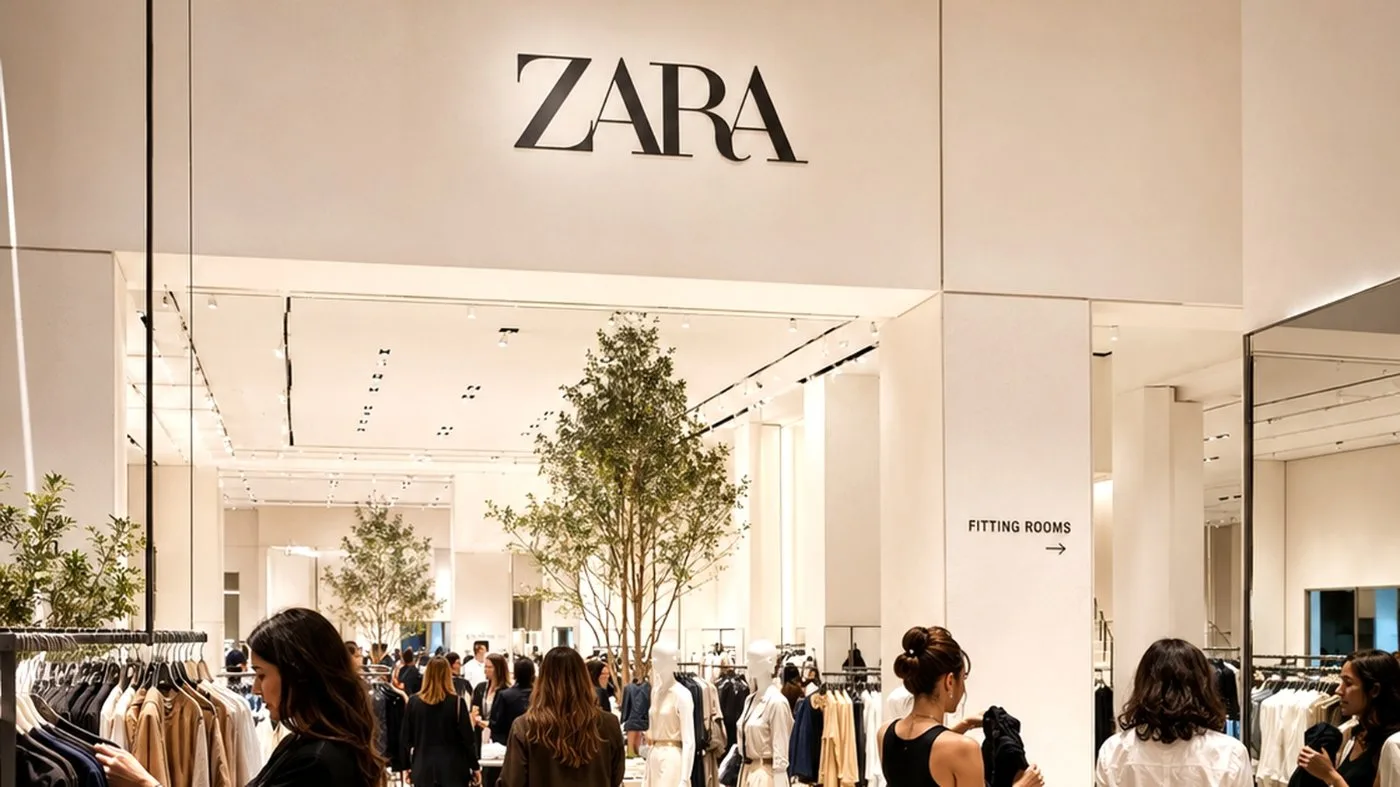
Hyperrealistic scene of customers inside a Zara store. Conceptual image generated for this analysis.
Prepared by Ariel Pfeffer arielpfeffer@gmail.com Life Rewards Action! | I design desire. I work on a limited number of mandates each year and accept only those where there is a structural question worth investigating, sufficient access, and a real capacity to act. AUGUST 2026 · VERSION 2.0 · INDEPENDENT EDITORIAL REPORT |
What is necessary is tolerated. What is desired is sought. PRECISION THAT REVEALS. DESIRE THAT TRANSFORMS. |
01 / THE BODY
━━━━━━━━━━
Zara did not become slow.
It became obvious.
People once entered Zara the way they enter an Istanbul market: a jewel might appear, or a shirt that three weeks later looked like a tablecloth—but you had to go in to find out.
That was the appeal.
The visit felt like an expedition. You rummaged, hesitated, tried something on, and made a slightly irresponsible decision because you knew that if you came back Saturday, it probably would be gone. Zara did not need a countdown clock. The entire store said: decide now or learn to live without it.
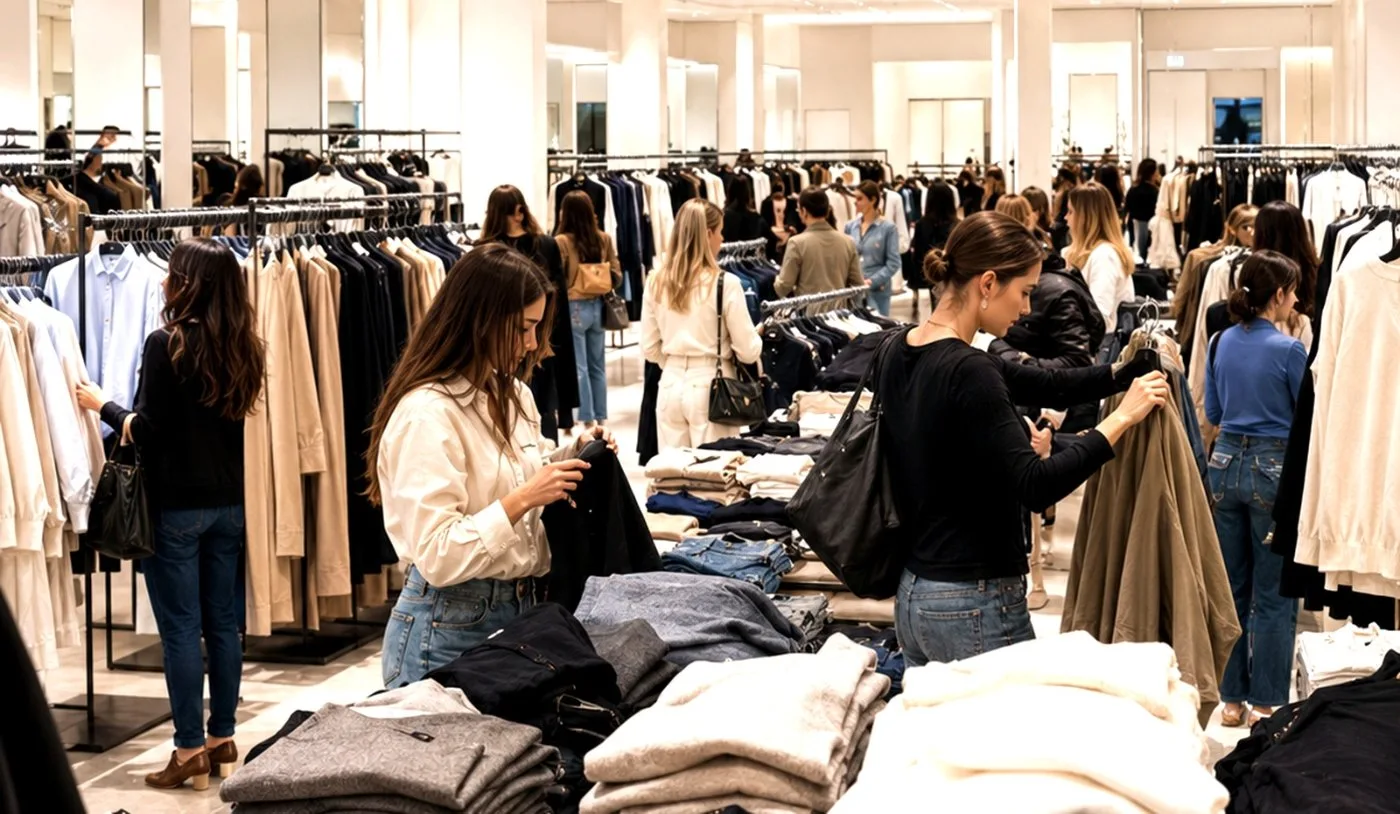
The current experience: abundance, search, and friction inside the store. Conceptual hyperrealistic representation.
From an experience of discovery to a search operation.
Today the experience is different.
The customer has already seen the garment in the app. Then on Instagram. Then on TikTok. Then on three other people. Then she saw a copy. Finally, she enters the store, finds two hundred garments crammed onto a rack, and starts searching for her size with the concentration of someone inspecting lost luggage at an airport.
The clothes are still new. The feeling is not.
Zara does not have a sales problem. It has a quieter problem: it sells enormous volumes without each purchase mattering very much. And when a company bills that well, nobody wants to be the unpleasant person in the meeting who asks whether it still creates desire. Spreadsheets tend to have terrible hearing for these things.
02 / THE LOST PROMISE
The customer never went to Zara simply to buy clothes
What she came looking for was a small social advantage.
She wanted to look more current than the amount she had paid. She wanted to find something before it became obvious. A few days later, she wanted to hear the question that justified the entire operation:
—Where did you get that?
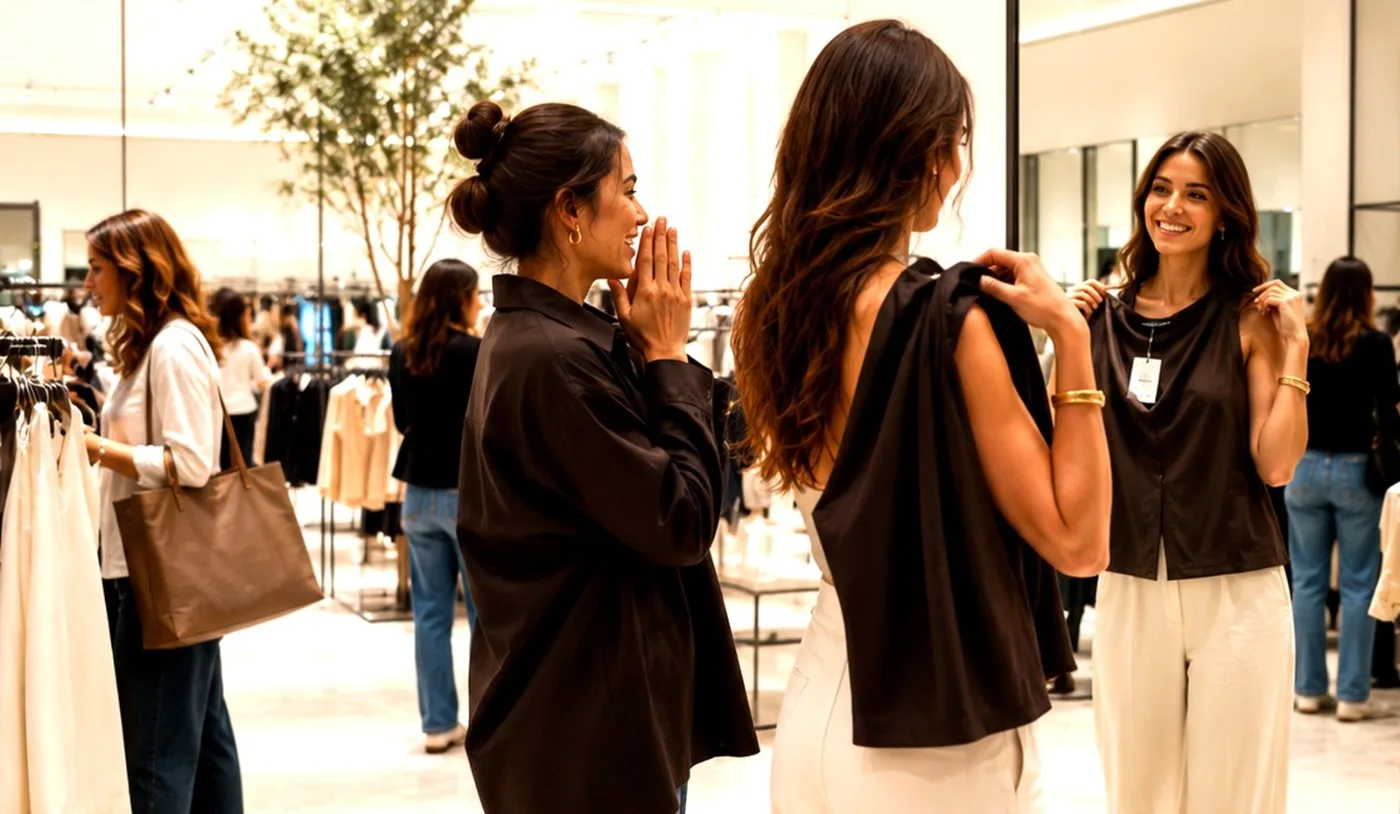
The emotional reward of the purchase: being noticed and hearing the question that turns a garment into a discovery.
Zara’s real product was that question.
The shirt, dress, or coat was the physical medium. The reward was feeling noticed, recognized, and slightly ahead of everyone else. Zara democratized something that once belonged to luxury: the feeling of having discovered something.
But discovery needs darkness.
You do not discover what has already been shown from seventeen angles, recommended by an algorithm, and sent in advance to five hundred people so they can post it on the same Tuesday. That is not discovery. It is distribution.
Zara became so good at placing garments before everyone’s eyes that it eventually stripped them of mystery. The brand that built its power on speed reached an uncomfortable point: now everything arrives fast—even boredom.
The natural response was to elevate the staging. Larger stores. Better materials. Editorial-looking campaigns. Technology. Self-checkout. Cafés. Spaces for creating content.
All of that can improve the visit.
None of it turns a garment repeated twenty thousand times into a discovery.
Marble has many virtues, but it has not yet learned to manufacture scarcity. And putting a café inside a store can make the wait more pleasant, just as a comfortable chair improves a notary’s office. Nobody mistakes the paperwork for an adventure.
03 / THE CAUSE OF DEATH
The real enemy is not Shein
Nor is it H&M, luxury, inflation, or online shopping.
Zara’s enemy is visible sameness.
Too many garments. Too many images. Too many units. Too many people wearing the same thing at almost the same time.
Abundance solved availability and destroyed the reward.
The customer enters knowing she will probably find something. The problem is that she no longer expects to find that something. She browses. Filters. Discards. Piles garments over her arm. Waits in line for a fitting room. Leaves two items anywhere because she no longer remembers where they came from.
Visible sameness: too many garments, too many people, and too much of the same thing at the same time.
A fitting room with a forty-minute wait is not exclusivity. It is an airport without airplanes.
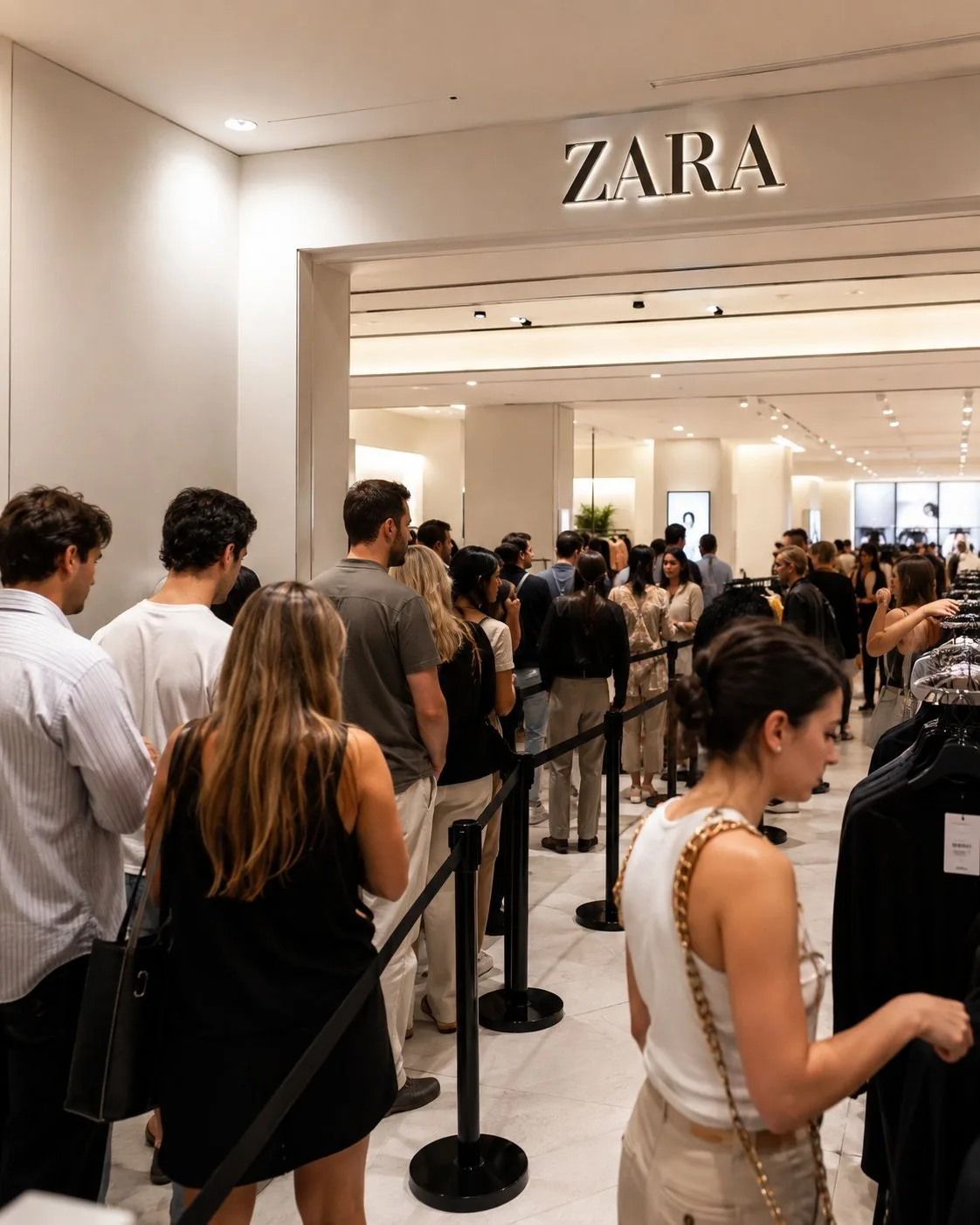
And a crowded store does not prove desire either. It may prove location, volume, and weak operating capacity. The desirable line forms before the doors open. The other one forms inside because someone miscalculated the number of registers.
Zara is trying to make the warehouse more efficient.
It should recreate the treasure hunt.
The word it needs to reclaim is not speed.
It is discovery.
04 / REBUILDING DESIRE
The resurrection cannot be another limited collection
A traditional limited collection would solve nothing.
The garments are announced. Photographed. Sent to creators. A preorder opens. Some sizes sell out. The brand celebrates. Three weeks later, nobody remembers the collaboration’s name.
That can generate sales.
It does not create a cult.
To create real lines, Zara must unite four things that are currently separated: verifiable singularity, democratic access, public spectacle, and a genuine fear of missing out.
01 VERIFIABLE | 02 DEMOCRATIC | 03 PUBLIC | 04 REAL |
ZARA 1/1 — The company that industrialized repetition begins by repeating nothing
Every week, selected Zara stores would receive one hundred genuinely unrepeatable garments.
Not one hundred units from a limited edition.
One hundred different garments.
Each one would exist only once.
They could begin as prototypes, pristine returns, excess inventory, samples, basics, and pieces that never reached production. A small local workshop would alter them through cuts, embroidery, dyeing, material combinations, tailoring, and details specific to each city.
A jacket could receive sleeves from another piece. A dress could change proportions. A shirt could be finished with embroidery created in Montevideo, Madrid, Tokyo, or Mexico City.
No two would be alike.
The company that made fast fashion accessible would become the first major brand capable of offering mass singularity: unique garments at prices an ordinary person can afford without mortgaging a relative.
That actually changes the category.
05 / THE RITUAL
The reveal
Every Thursday at 7:00 p.m., the participating store’s windows would be covered.
There would be no advance photographs.
There would be no online catalog.
There would be no carefully organized leaks designed to look like leaks.
There would be no boxes sent to famous people expressing surprise in front of a camera that was already turned on.
At 8:00 p.m., the windows would be uncovered and the one hundred garments would appear.
Each would carry a number, the city’s name, and a simple statement: One exists. There will not be another.
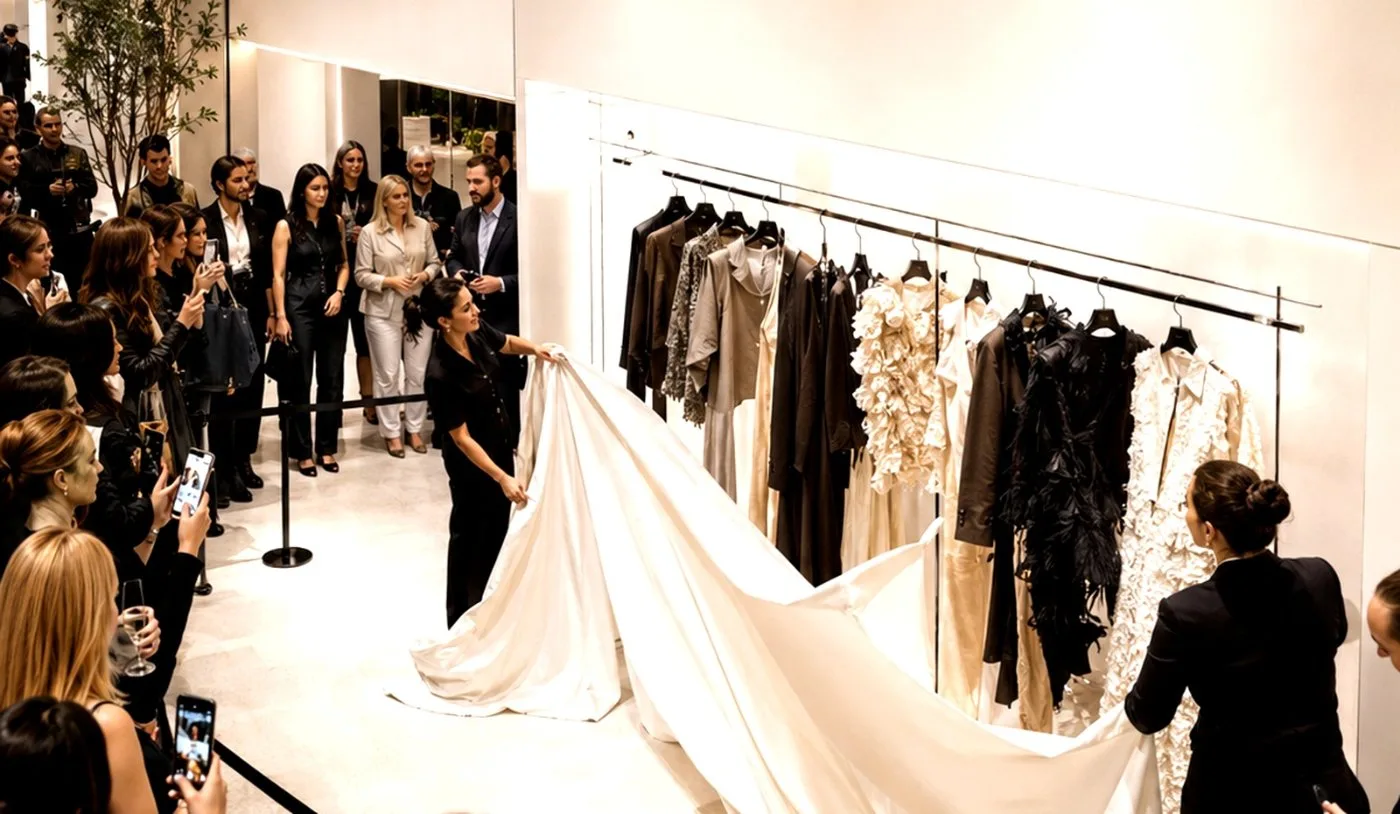
ZARA 1/1: a physical, public reveal limited to one garment per design.
For the first fifteen minutes, the garments would move through the space on real people selected in that city: customers, musicians, cooks, students, artists, stylish retirees, and people who know how to dress but have not yet hired someone to announce it to the world.
Then the sale would open.
One garment per person.
No restock. No later markdown. No “inspired by” version.
Once sold, the design would be removed from the system. The buyer would receive a simple digital certificate showing that the combination would never be reproduced.
A QR code can do that job. It does not need to write a poem.
06 / OWNERSHIP
The customer makes the final decision
So that this is not merely the purchase of a unique piece made by Zara, the buyer would choose the final intervention.
She could select among three finishes: a change in length, a color detail, embroidery, a collar modification, a button combination, or an interior mark.
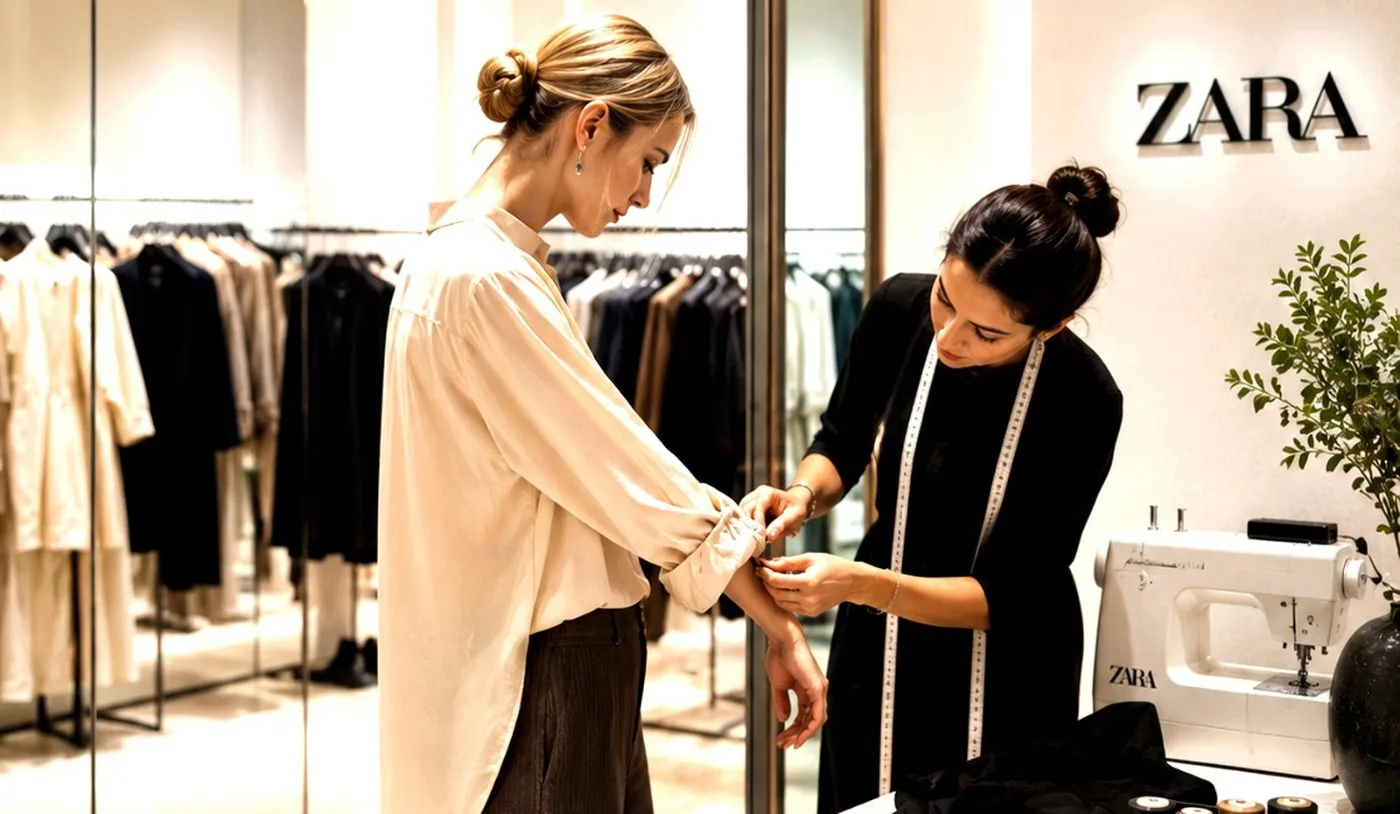
The final intervention: the customer chooses the alteration or detail that makes the piece her own.
The garment would be completed in the workshop and delivered 48 to 72 hours later.
That small delay matters.
The purchase stops being instantaneous. There is anticipation. A return. A second visit. And the person can say something no mass collection honestly allows her to say: “I finished it.”
Zara would not be selling full customization, which is usually slow, expensive, and dangerously close to choosing fonts for a birthday card.
It would allow a final decision visible enough to create emotional ownership.
07 / ACCESS
How access works
The proposal must not become a club for the biggest spenders. That would be the easy path—and a profoundly boring one.
The line would be organized through three doors.
Sixty percent of the places would be completely open. Anyone could show up and receive a number in order of arrival.
Twenty-five percent would be earned access. It would be obtained by bringing in a Zara garment more than three years old to repair, resell, or transform. The brand would reward people who maintain a relationship with clothing, not merely those who empty a rack.
The remaining fifteen percent would be local invitation access. Store employees and previous buyers could invite people whose style, story, or use of clothing was interesting. Not based on follower count. If having an audience becomes the requirement again, we will have invented another VIP lounge full of people staring at their phones.
Early access would last four months.
Two no-shows without notice would suspend it for the following season. The possibility of losing it is what turns a benefit into a privilege.
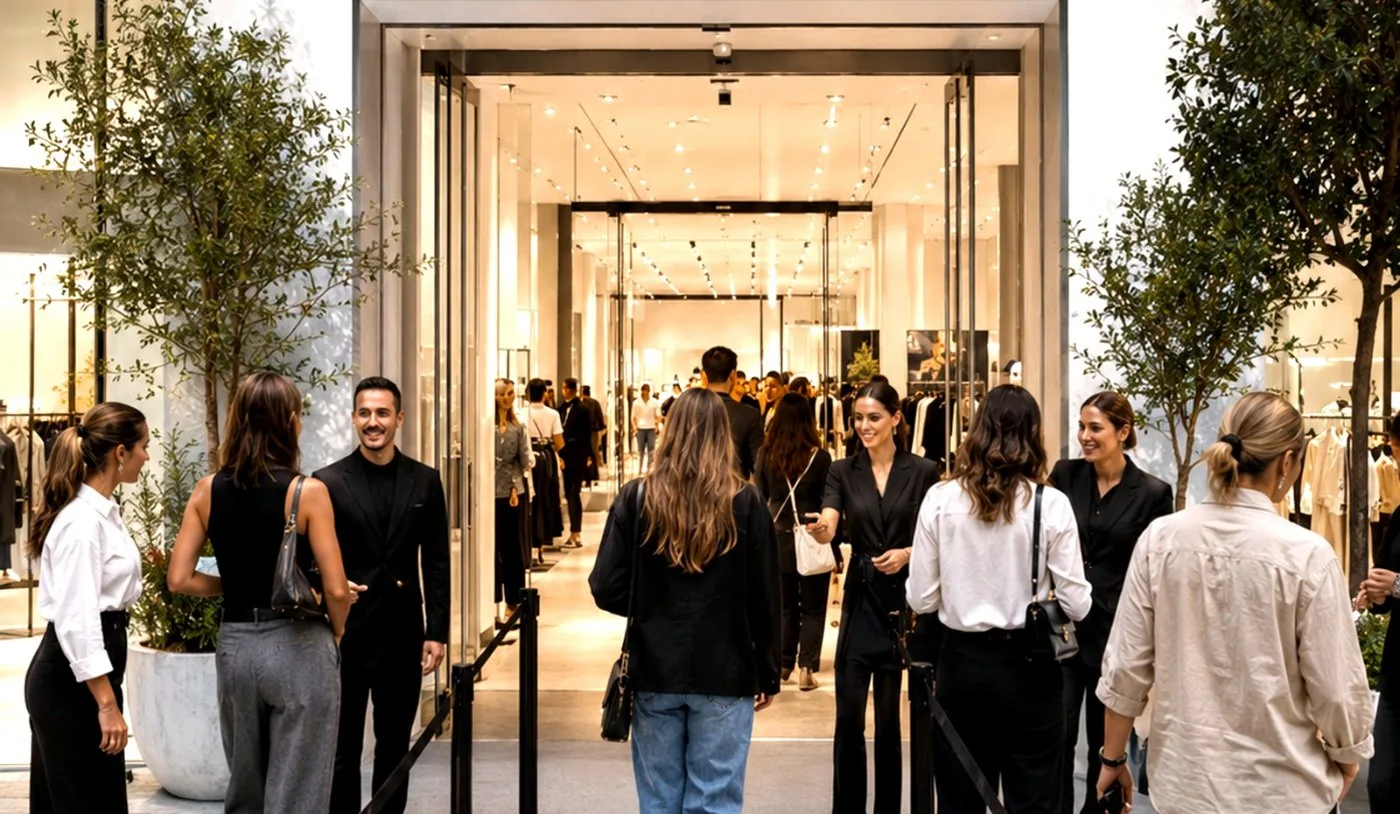
Visible, orderly access: an open door, earned access, and local selection in a recognizable store.
What it costs
The garments would have three transparent price bands:
Simple pieces: €70 to €110.
Garments with more extensive intervention: €120 to €180.
Complex pieces or coats: €190 to €280.
These are design hypotheses to be tested, not prices handed down on a celestial tablet.
The goal would not be to compete with luxury. It would be to let someone buy something genuinely unrepeatable for far less than what an allegedly exclusive garment made in hundreds of units costs today.
Singularity would no longer depend on the logo or the price.
It would depend on one fact: no other one exists.
08 / THE REWARD
What the person receives
In addition to the garment, the customer would receive:
The chosen final intervention.
One basic alteration included.
Free repairs for two years.
Authentication for future resale.
A record of city, date, and number.
Early access to one reveal per season.
One transferable invitation to bring another person.
Priority access to transform an older Zara garment.
There would be no permanent discounts.
People do not stand in line to receive ten percent off a garment they were not sure they wanted. They stand in line for something they fear losing—and then want to talk about.
Why this can actually create lines
Because it brings together the ingredients the previous proposal left separated.
There is a genuinely scarce object, not scarcity written by marketing.
There is a specific time.
There is a ritual visible from the street.
There is open access, so anyone can participate.
There is earned privilege, rewarding relationship rather than money alone.
There is an easy story to tell.
And above all, there is a real loss: if you do not enter, that garment leaves with someone else and does not return.
Not “it may sell out.” Not “last units.” Not “it could return next season.”
It does not return.
Fear of missing out works when the loss is real. Everything else is yellow signage with red lettering.
09 / THE EVENT
The idea that would turn the launch into global news
ZARA 1/1 would be the weekly engine.
But establishing it globally requires an act no ordinary campaign can match.
ZARA BLACKOUT — The day Zara disappears from the internet
For twenty-four hours, Zara’s website and app would stop displaying products in the selected markets.
No dresses. No pants. No models staring at a point slightly outside the frame.
There would be only a black screen, a countdown, and one sentence: “Tomorrow you will have to come and see it.”
ZARA BLACKOUT: the physical store becomes the only place where the collection can be discovered.
At a set time, the major stores would simultaneously reveal their first ZARA 1/1 collections.
Each city would receive different garments.
Nothing could be purchased online during those hours.
Nothing could be reserved.
Nothing would have been shown in advance.
The company that helped turn fashion into an endless stream of images would voluntarily switch off its images to recover one thing: curiosity.
The story would not be that Zara launched another line. The story would be: “Zara closed its online store to get people to leave their homes again.”
That is press.
That is conversation.
That is a brand image capable of traveling on its own.
And the economic cost of switching off e-commerce for a few hours in selected markets could be measured with absolute precision. Zara would know how much revenue it gave up, how much physical traffic it produced, how many registrations it generated, and how much value it earned through organic coverage.
A confident company can afford to be temporarily absent. Only desperate brands need to appear every day.
10 / CREDIBILITY
The second idea that runs against the industry’s logic
Once per quarter, each participating store would have one day when it sold no new garments.
NOTHING NEW
On that day, the store would carry only used, repaired, recombined, or transformed Zara garments.
Customers could bring older pieces and turn them into something different. A shirt could become a skirt. Two jackets could become one. A dress could regain a decade of life with a new cut.
The window would say: “Today we did not make more clothes. We made what already exists matter again.”
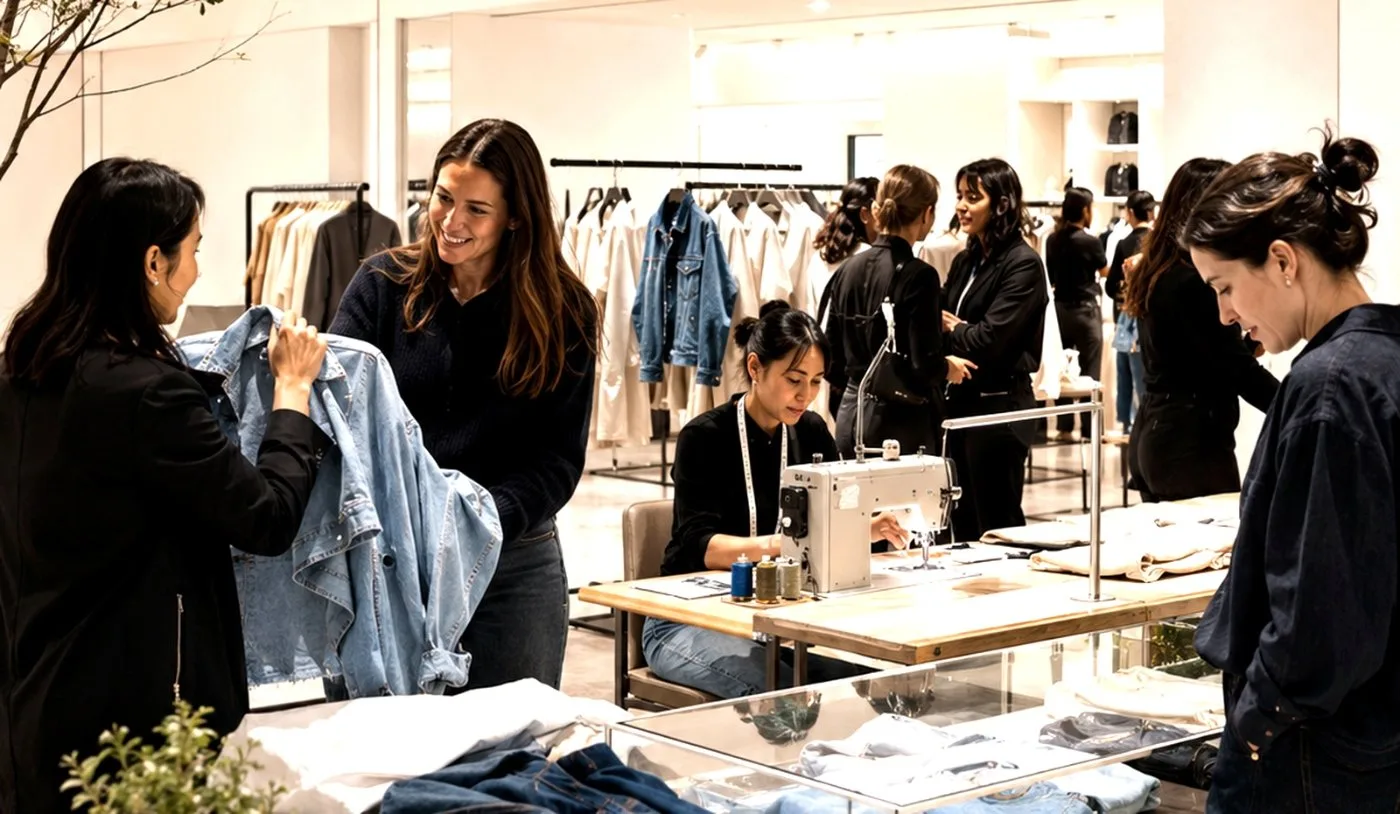
NOTHING NEW: repairing, recombining, and transforming garments in front of customers.
The idea does not replace the core business. It puts it under tension.
Once every three months, Zara would demonstrate that it can create desire without producing more units. It would be difficult to accuse the company of using repair as decoration if, for an entire day, it genuinely refuses to sell new product in that store.
In addition, NOTHING NEW would feed ZARA 1/1 with materials, stories, and participation.
One idea creates desire. The other gives it credibility.
11 / THE TEST
The first 90 days
Days 0–30: build
During the first month, three pilot stores would be chosen in cities with different cultures. Not necessarily the largest ones. The stores with enough customers, strong teams, and the ability to turn the location into a stage without causing an administrative fire.
Each store would prepare one hundred garments.
Local workshops, access rules, the three price bands, and the registration system would be created. The current baseline would be measured: traffic, conversion, repeat visits, dwell time, full-price sales, and visit frequency.
Days 30–60: reveal
Between days 30 and 60, the first ZARA BLACKOUT and two weekly reveals would take place.
The initial signs that desire had caught fire would be:
More than 250 people before opening.
Eighty percent of the garments sold within 24 hours.
More organic content than commissioned content.
At least twenty percent of earned access obtained through repair or resale.
Access requests exceeding availability by more than five times.
Customers traveling from other cities to attend.
Days 60–90: repeat
Between days 60 and 90, the weekly ritual would be repeated and the first NOTHING NEW would take place.
The decisive metric would not be the size of the first line.
Any large brand can hire music, install barriers, and manufacture an opening-night line. The test would be repetition: how many people return, how many bring older garments, how many wait for the next Thursday, and how many talk about what they still have not seen.
The line is the photograph. Desire is the behavior that repeats after the cameras leave.
TIMELINE / VALIDATION
The 90 days, turned into a test
The line is the photograph. Desire is the behavior that repeats after the cameras leave.
0–30 BUILD | Select three pilot stores. Set up local workshops. Define access, pricing, registration, and the baseline. Signal: operations ready and initial measurement complete. |
30–60 REVEAL | Execute the first ZARA BLACKOUT and two weekly reveals. Measure demand, full-price sales, and organic content. Signal: more than 250 people before opening and 80% sold within 24 hours. |
60–90 REPEAT | Repeat the weekly ritual, activate NOTHING NEW, and observe how many people return, keep, repair, and recommend. Signal: interest survives after the cameras leave. |
12 / THE VERDICT
The verdict
Zara does not need to produce more newness.
It needs to produce less obviousness.
The brand that taught the world to manufacture quickly must now learn something far more difficult: when not to show, when not to repeat, and when to let a garment disappear.
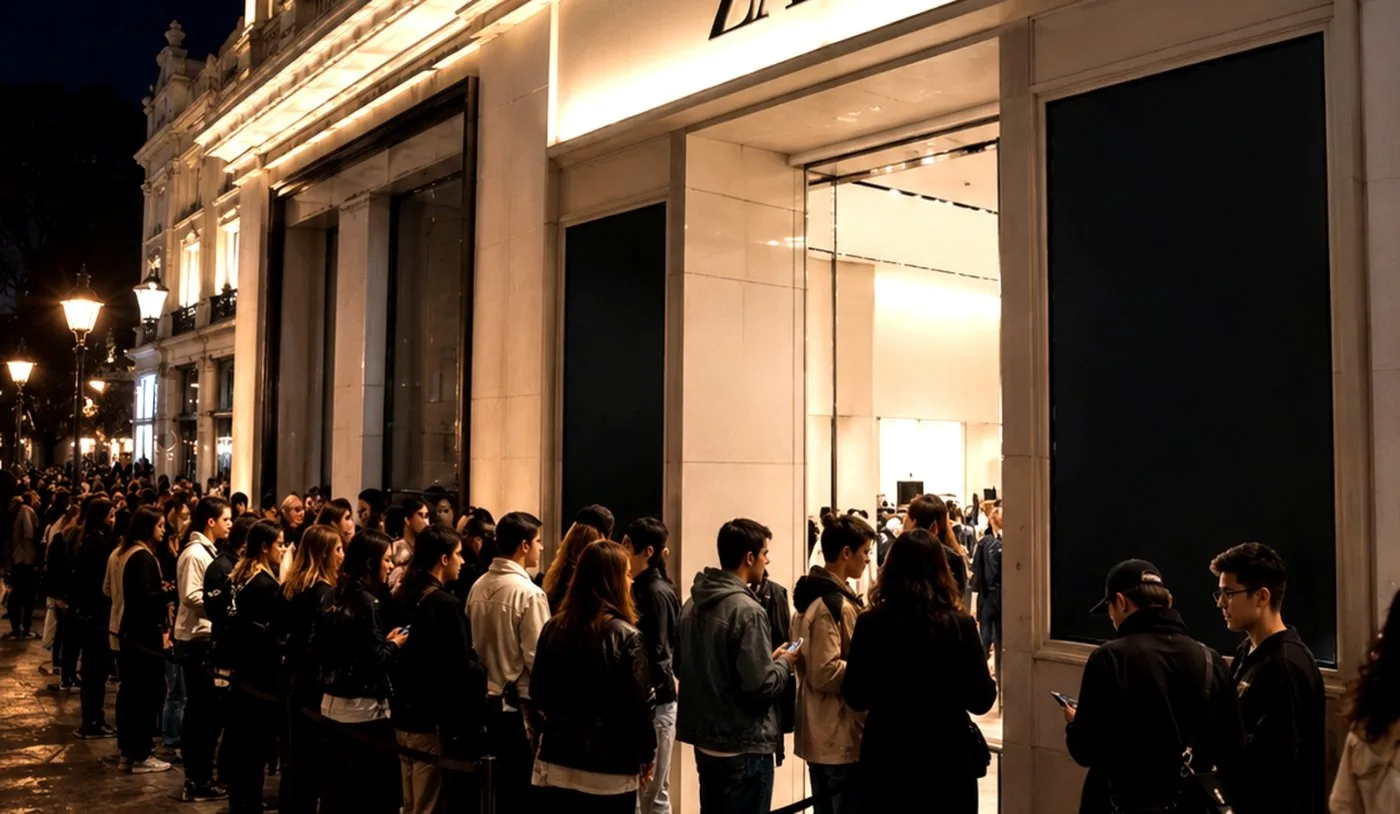
Because nobody stands in line in front of a warehouse, however beautiful the marble may be. People stand in line at a door when they believe something behind it will no longer exist tomorrow.
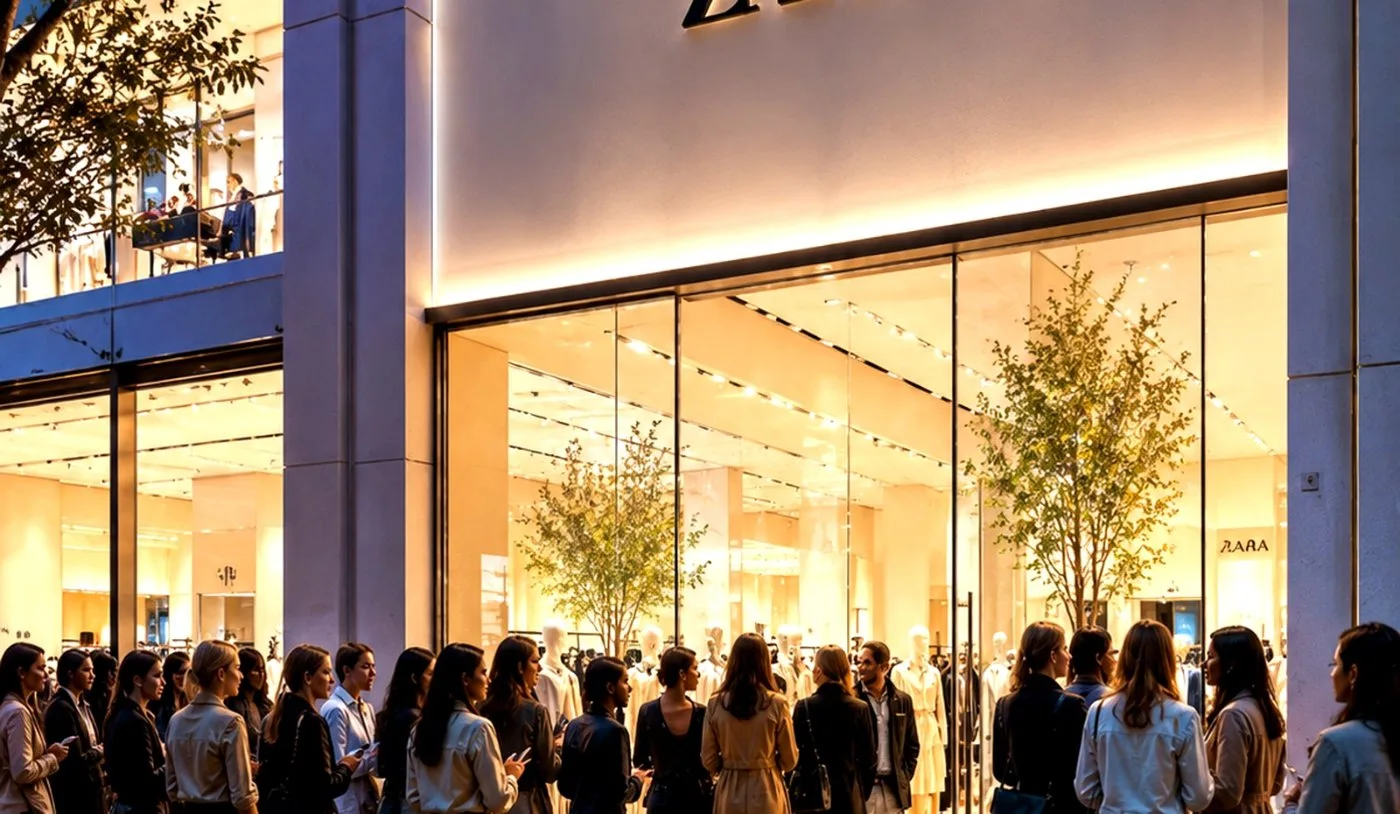
Closing image: customers waiting outside a clearly identified Zara store. The line as the consequence of real loss, not an operational delay.
CREDITS / METHODOLOGY
About this piece
Prepared by Ariel Pfeffer
Contact: arielpfeffer@gmail.com
I design desire. I work with a limited number of organizations each year to preserve the depth and independence of the diagnosis.
LIFE REWARDS ACTION!
Methodological note
This document develops a strategic and creative hypothesis for designing desire. The proposed prices, percentages, quantities, thresholds, and metrics are design hypotheses subject to validation through pilot programs; they do not constitute internal Zara information or guaranteed forecasts.
Public reference sources
Inditex Annual Report 2025: financial performance and evolution of the retail network.
Corporate communications from Zara and Inditex concerning stores, campaigns, technology, and services. The visual scenes included are hyperrealistic images generated for editorial and conceptual purposes; they are not official photographs or campaigns from Zara or Inditex. Logos and trademarks belong to their respective owners and are used solely for identification, criticism, and analysis.
Public information from Zara Pre-Owned.
News coverage of flagship stores, self-checkout, and the in-store experience.
Public consumer reviews used solely as qualitative signals, not as a statistically representative sample.
Legal notice
Zara, Inditex, their trade names, logos, trademarks, designs, corporate imagery, and other distinctive signs belong to their respective owners. This document is an independent editorial and conceptual analysis that was not commissioned, sponsored, authorized, or approved by Zara or Inditex. References to brands and products are made for the purposes of analysis, criticism, and strategic proposal. The illustrations included are original conceptual representations and do not reproduce official company materials.
Legal disclosure: all logos, trademarks, trade names, and other protected elements belong to their respective owners and are used solely for analysis, identification, and strategic diagnosis.
AUTOPSIES OF DESIRE / What is necessary is tolerated. ━━━━━━━━━━━━━━━━ Prepared by Ariel Pfeffer arielpfeffer@gmail.com Life Rewards Action! I design desire. I work with a limited number of organizations each year to preserve the depth and independence of the diagnosis. AUTOPSY #3 · ZARA · AUGUST 2026 BRAND DIAGNOSTIC METHOD Precision that reveals. Desire that transforms. |
Now everything arrives fast—even boredom.
Abundance solved availability and destroyed the reward.
Marble has many virtues, but it has not yet learned to manufacture scarcity.
The verdict
It has a quieter problem: it sells enormous volumes without each purchase mattering very much.
What would an autopsy of your business say?
Every new autopsy reaches the list first: the short version, the key finding and a few extra things I don't publish anywhere. No spam, no discounts, no "last chance".
Get the autopsies before anyone else →